Au dessus, une ancienne poste de transformation électrique, construite en 1929, reconvertie en bureaux.
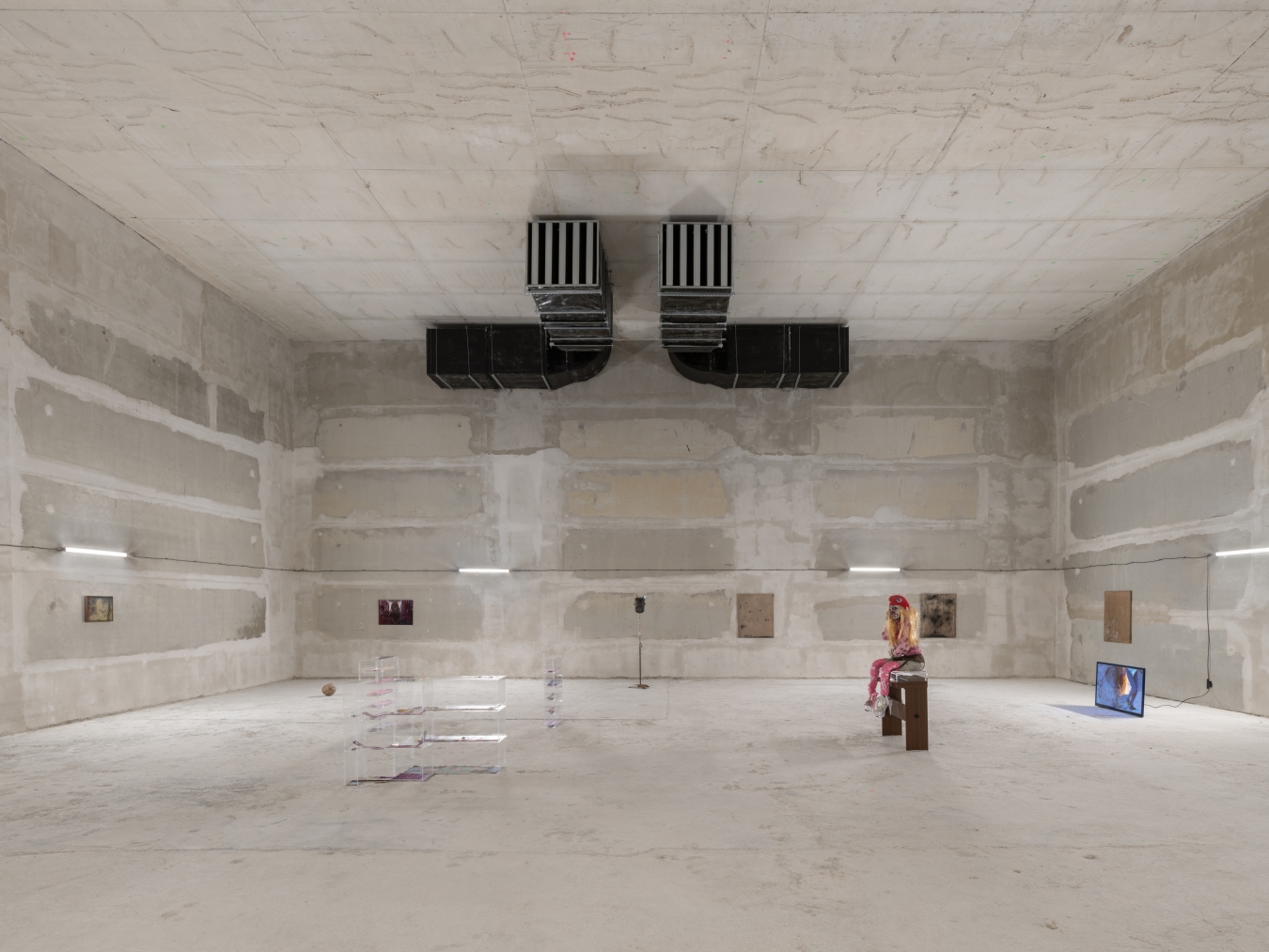
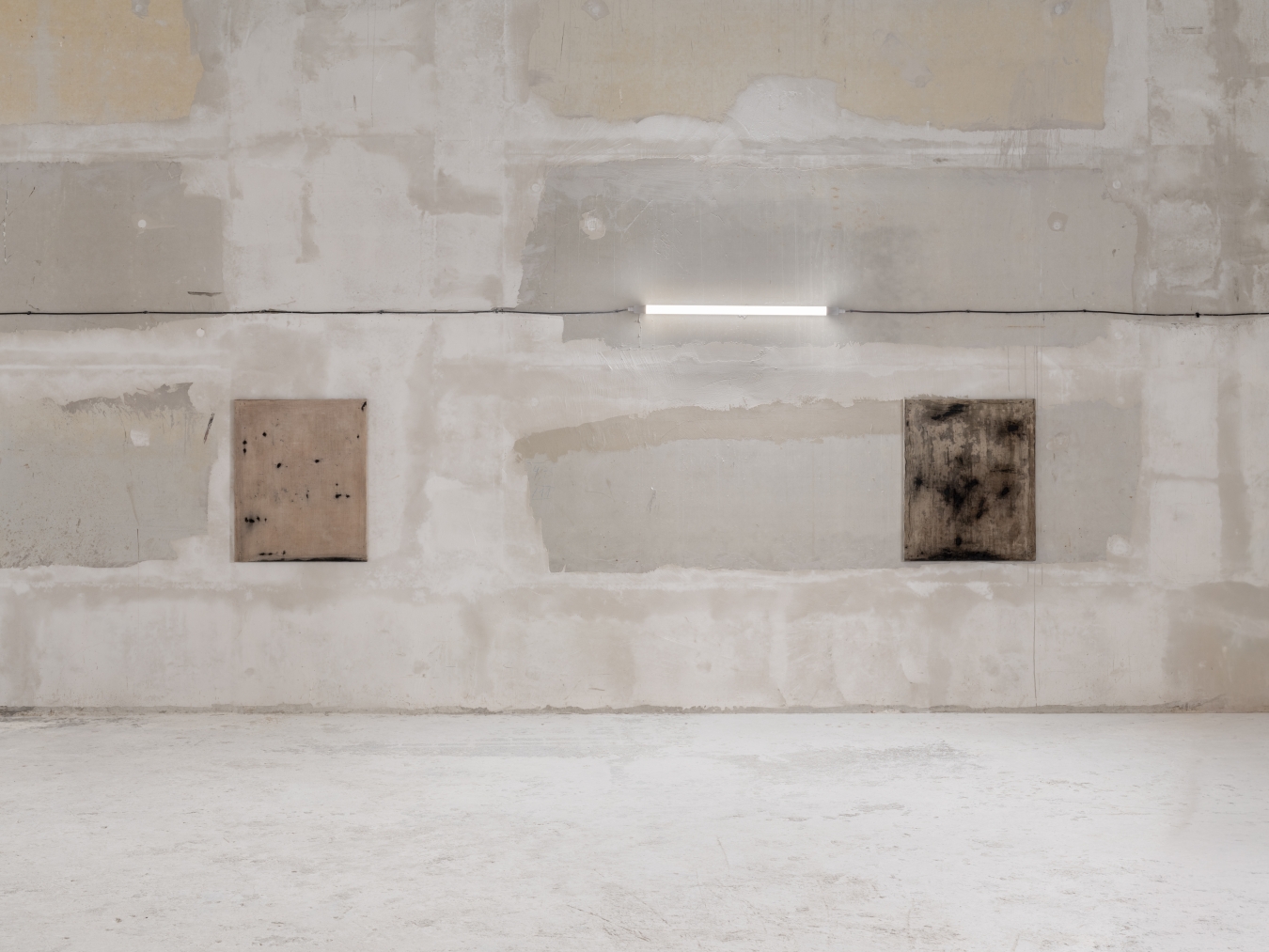
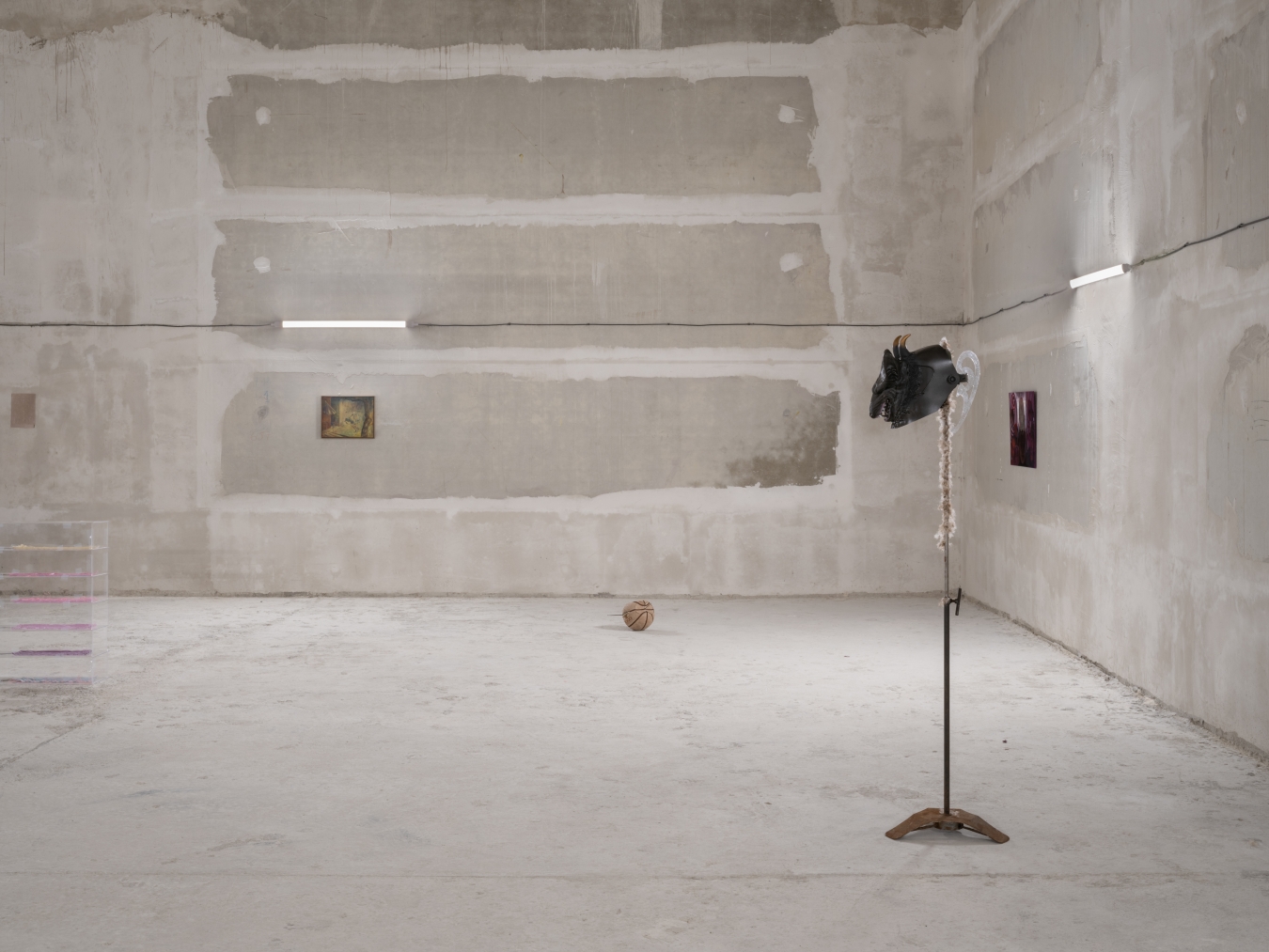
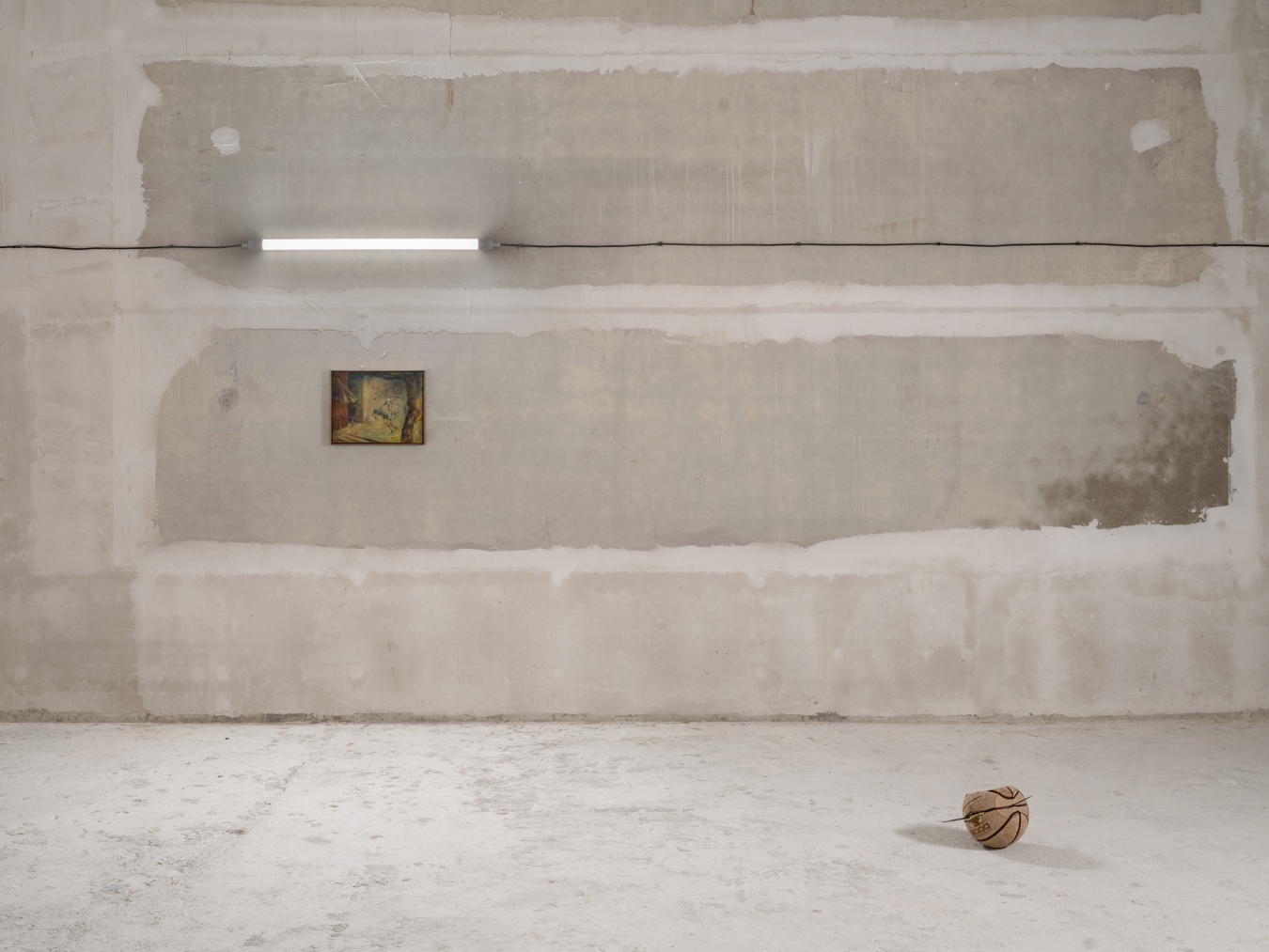
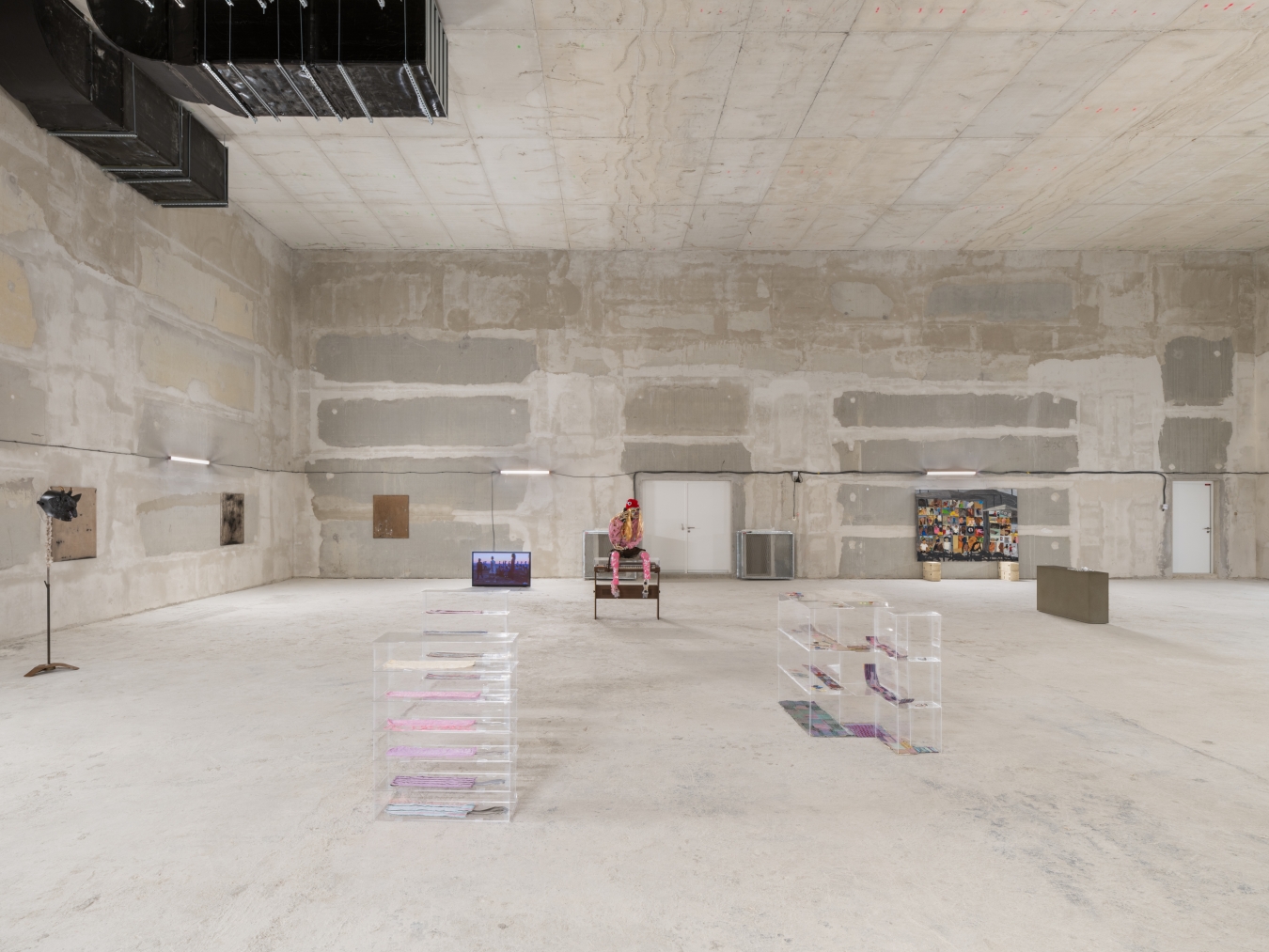
En dessous — un espace creusé, suspendu dans le vide qui l’entoure, isolé pour que le son ne s’échappe pas. Une boîte dans la boîte. Seize secondes de reverb. Bientôt ce sera un studio d’enregistrement — un orchestre symphonique y tiendra. Pour l’instant c’est une cave dans une ville qui ne sait plus vraiment qu’elle en a. Les murs sont en béton brut. Des néons courent le long des parois. Gaston Bachelard avait un mot : ultra-cave : des sous-sols de sous-sols qui communiquent souterrainement avec tout.
Certains préhistoriens ont suggéré que les grottes étaient choisies pour leur acoustique — les endroits où la roche résonnait. Peut-être qu’on y peignait là où le son tenait. Avant qu’on décide ce qui valait quoi et pour qui. Avant l’histoire. Le son ne disparaît pas vraiment, il se déplace, il se transforme, il ressurgit ailleurs. Il continue de vibrer dans les matières qu’il a traversées.
L’art a accompagné l’histoire. Laura Vazquez ouvre Les Forces avec une citation de Henry Thoreau : « malgré tout, nous nous croyons sages et nous avons établi un ordre à la surface ». C’est de cet ordre-là qu’il s’agit. Et de ce qui travaille en dessous. Des cultures reléguées aux racines, des pratiques enfouies, des formes de vie que l’histoire de l’art a masquées en se projetant vers l’avenir. Ces forces n’ont pas disparu. Elles résonnent encore, transformées, souterraines.
Le 6 août 1945 a changé la face du monde. Günther Anders l’a nommé : le décalage prométhéen. L’homme est devenu infiniment petit face aux productions techniques dont il est capable, incapable même d’adapter son imagination aux implications de ses constructions destructrices. Paul Virilio a photographié pendant des années les bunkers du Mur de l’Atlantique, ces grottes bétonnées creusées pour survivre à nos propres productions. Face à l’océan, une seule ouverture — l’embrasure. Des oreilles mortes tournées vers le large. L’habitant de ces lieux possédait déjà, disait-il, la rigidité cadavérique que l’abri était censé lui éviter. La grotte est devenue bunker, le refuge est devenu tombeau, le son est devenu silence forcé.
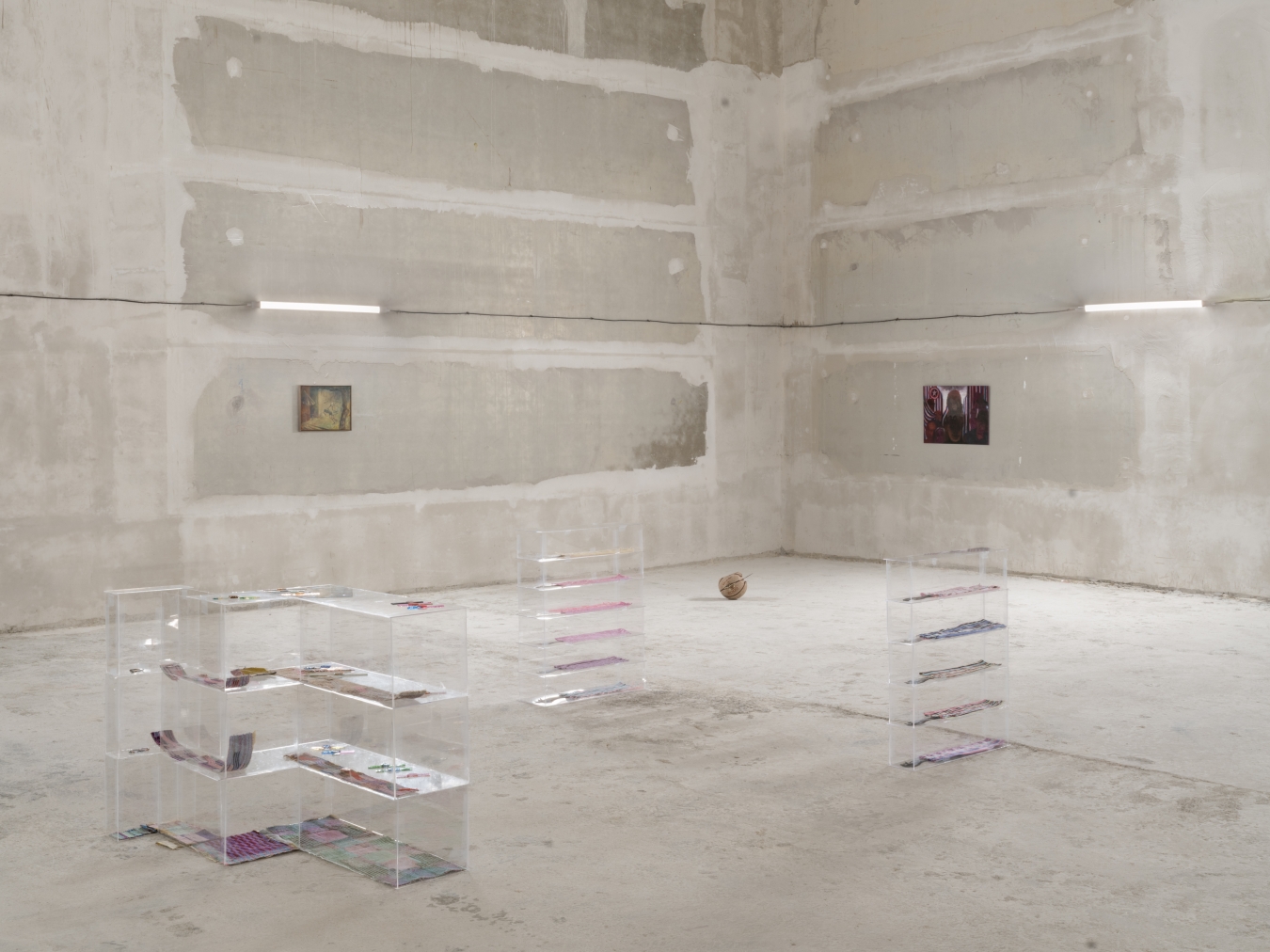
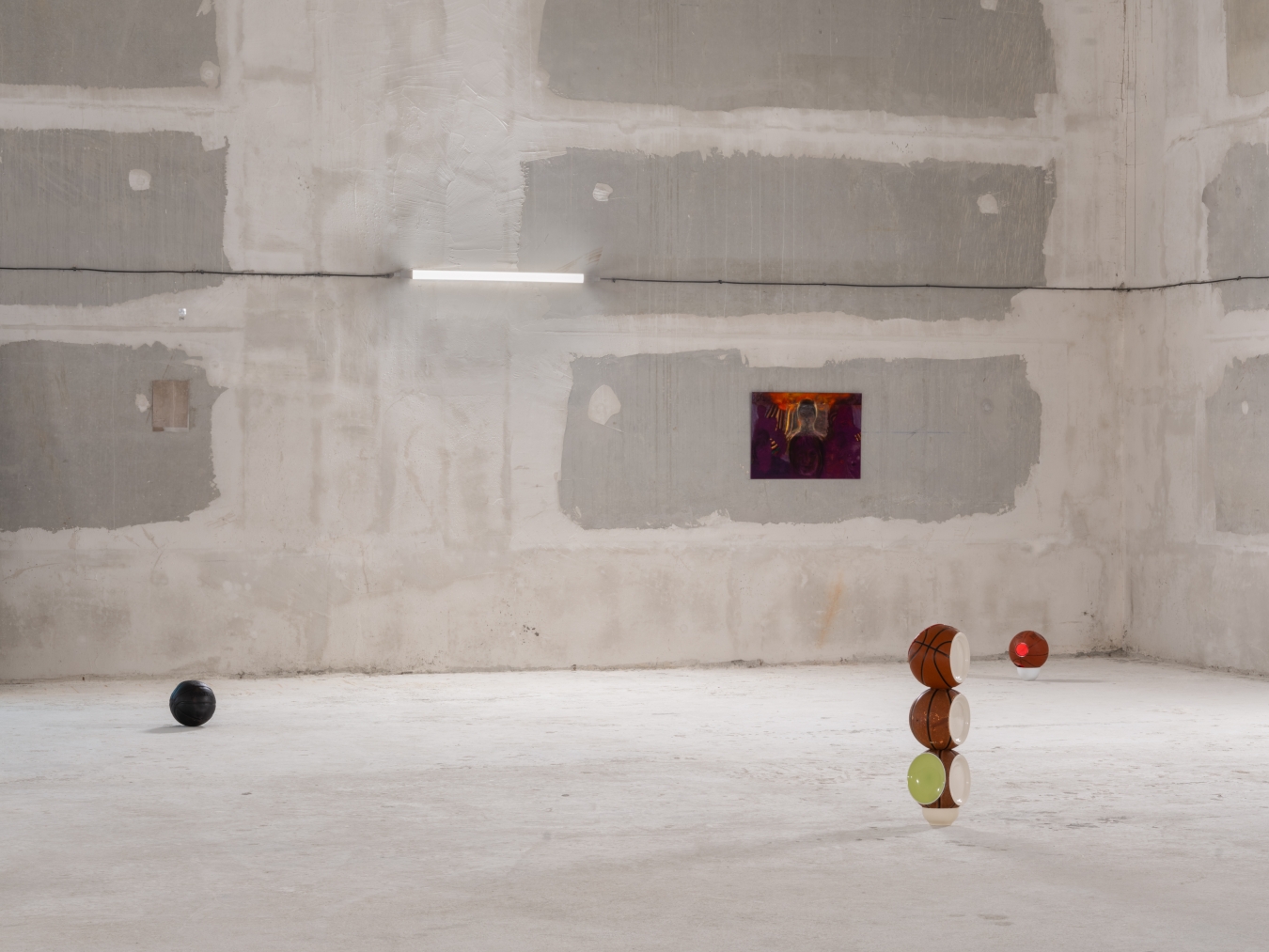
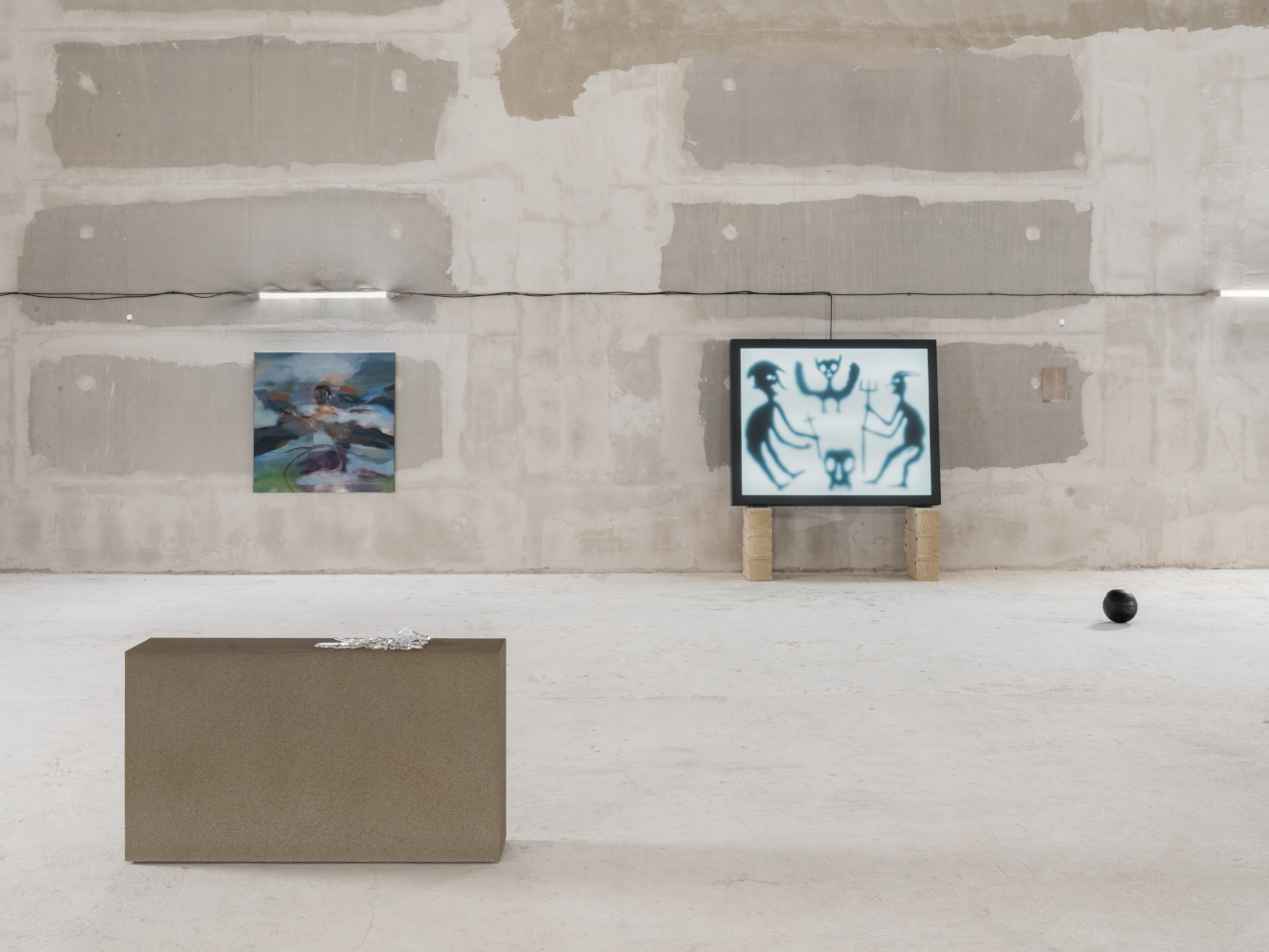
Ici — treize artistes dans cet espace brut, ces murs de béton, ces néons. Les oeuvres ne sont pas accrochées. Elles sont posées, installées, habitées. Elles ne décorent pas. Elles forent. Elles vibrent.
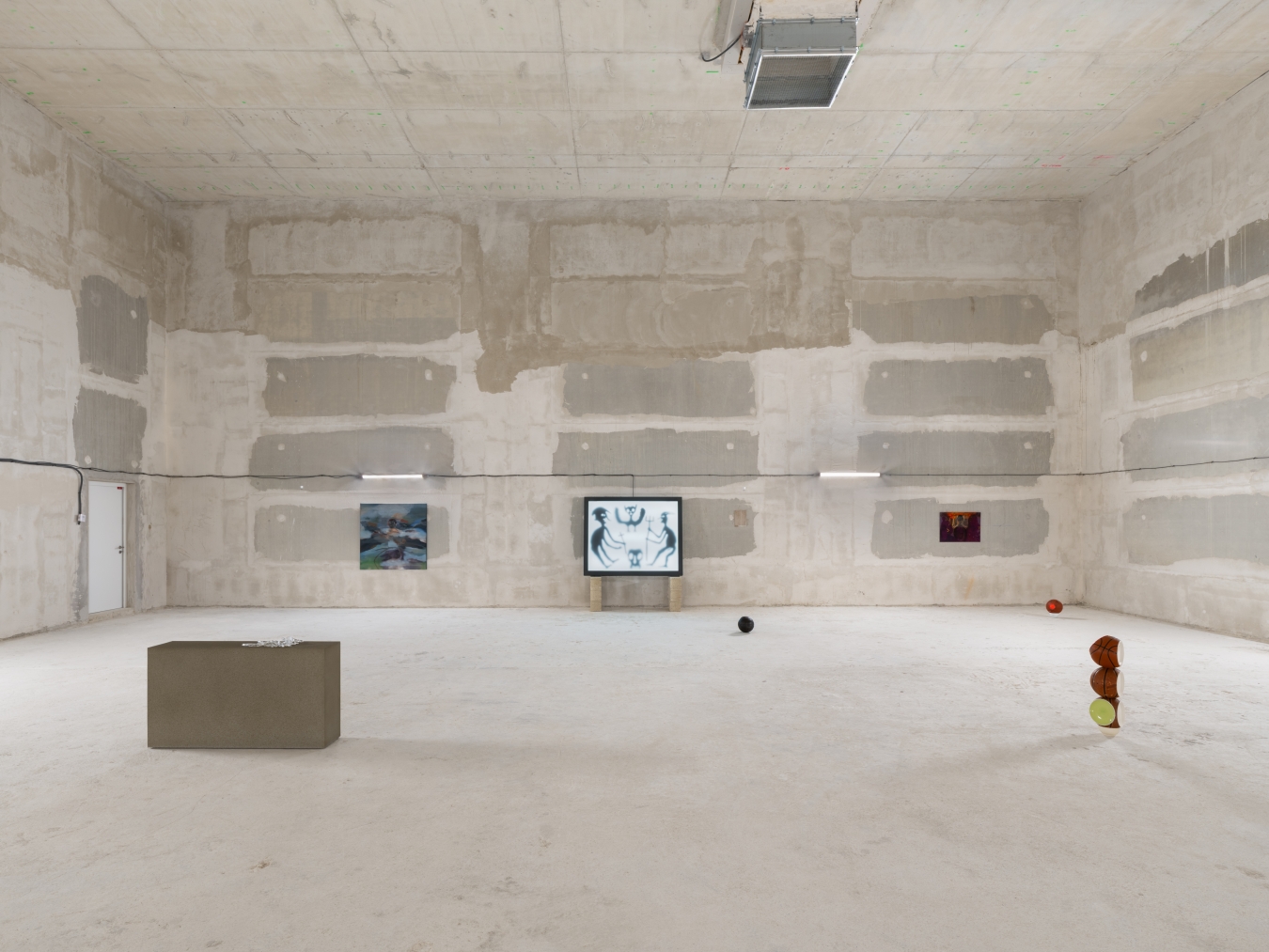
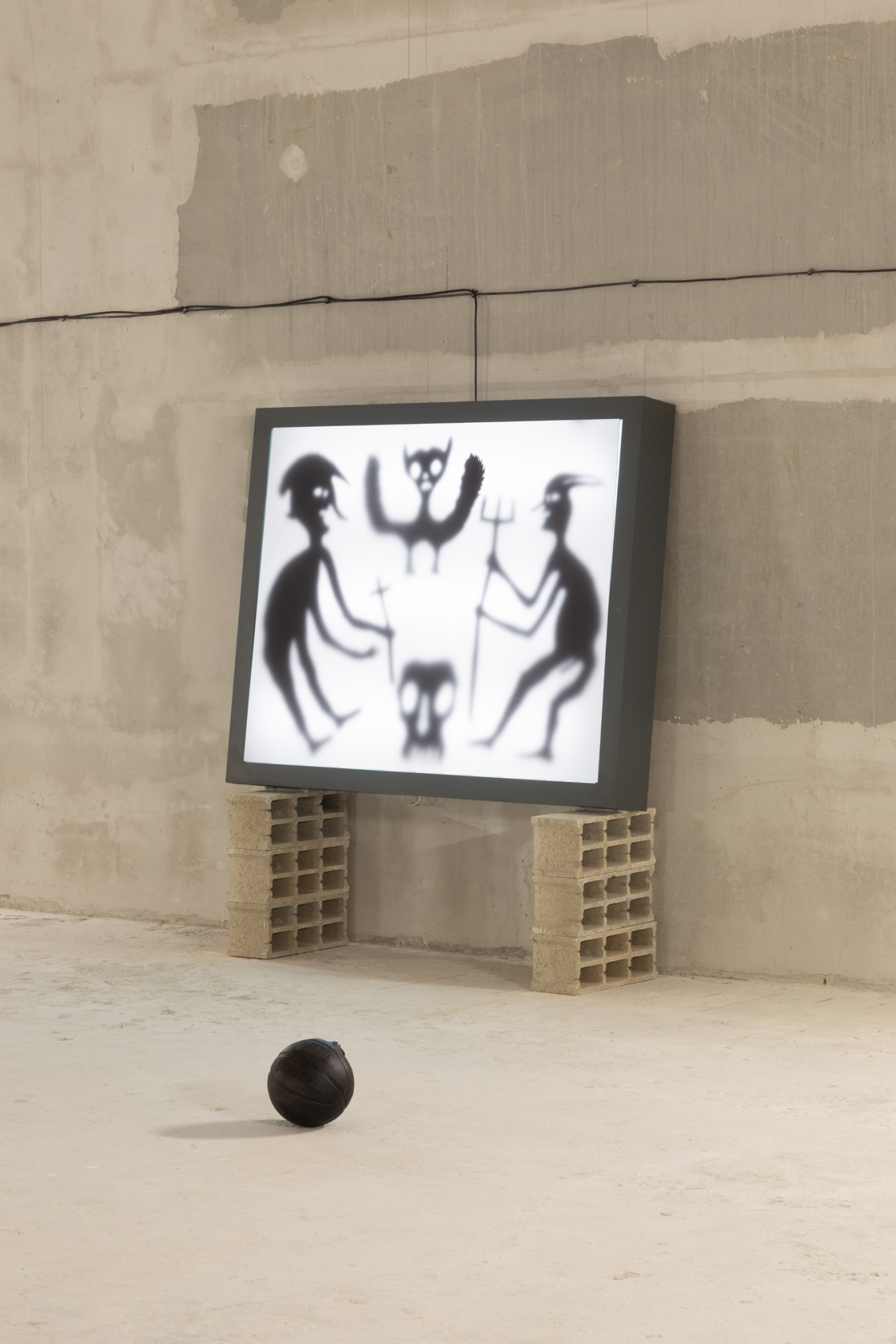
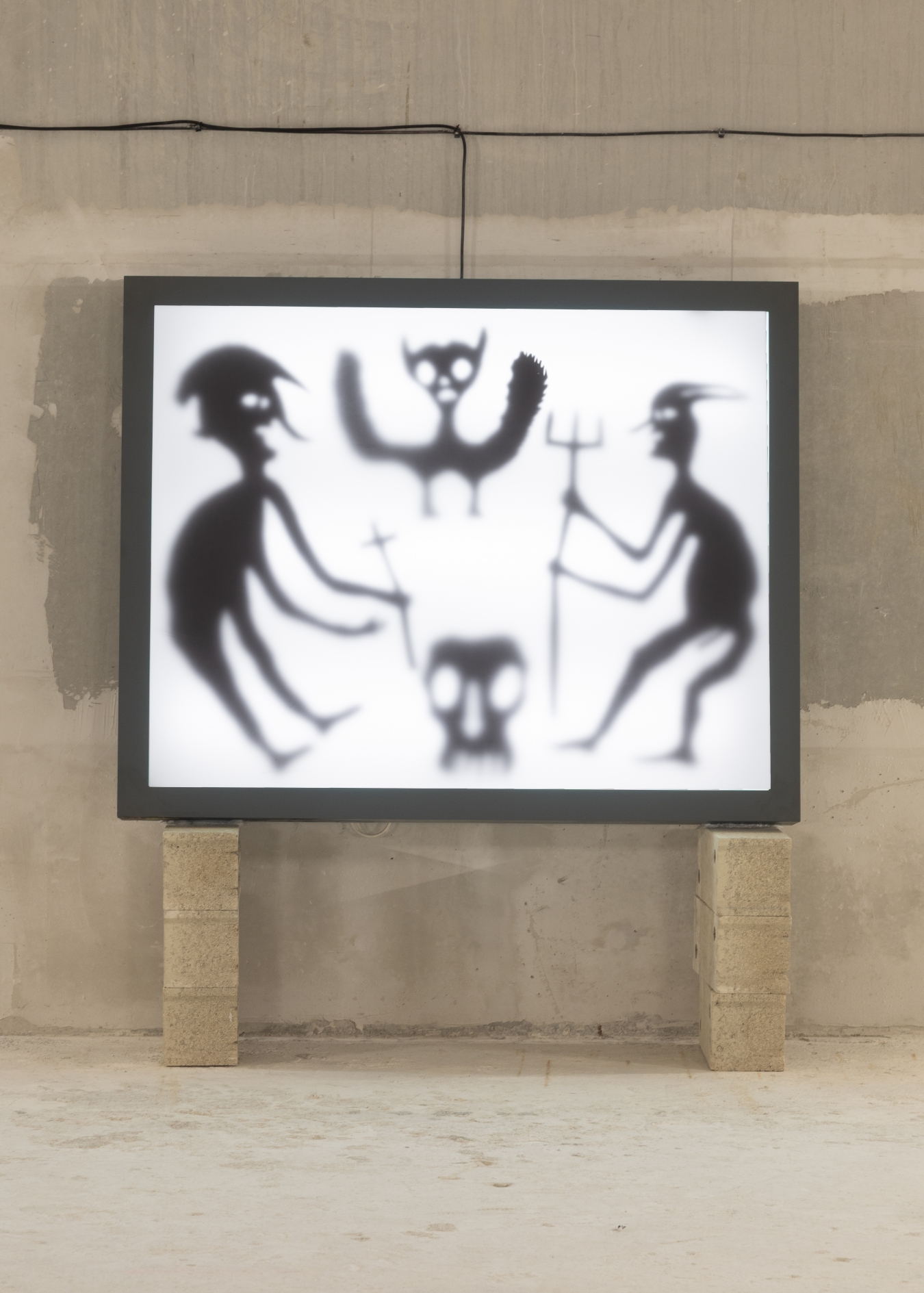
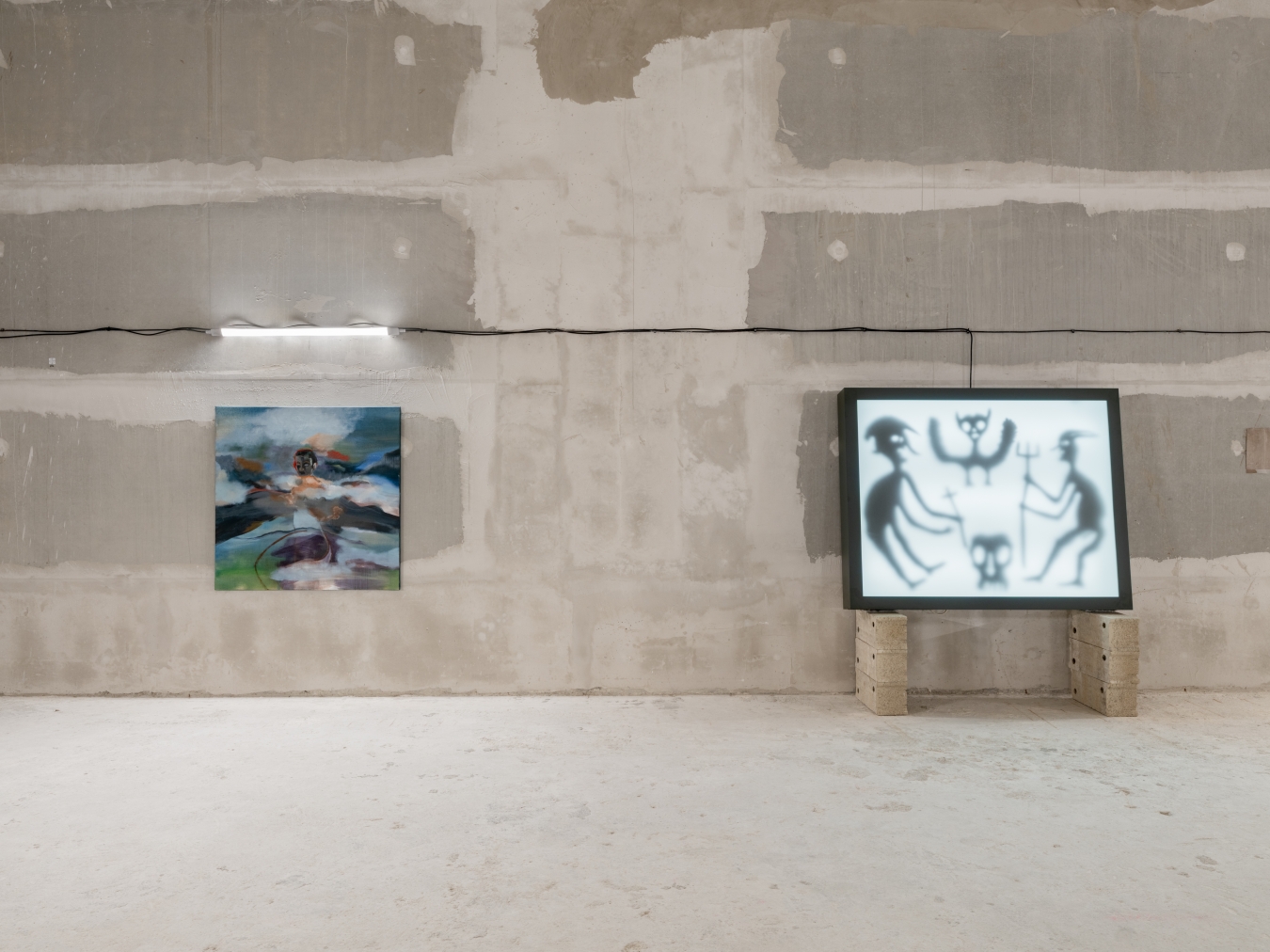
Shadow Cinema est posé contre le mur de béton. C’est une oeuvre de Christian Boltanski qui figure des silhouettes éclairées sur un écran translucide — des figures archaïques, des cornes, des fourches. Werner Herzog avait nommé proto-cinéma ce que les Paléolithiques faisaient déjà à Chauvet — éclairer des ombres sur une paroi pour donner l’illusion de la vie.
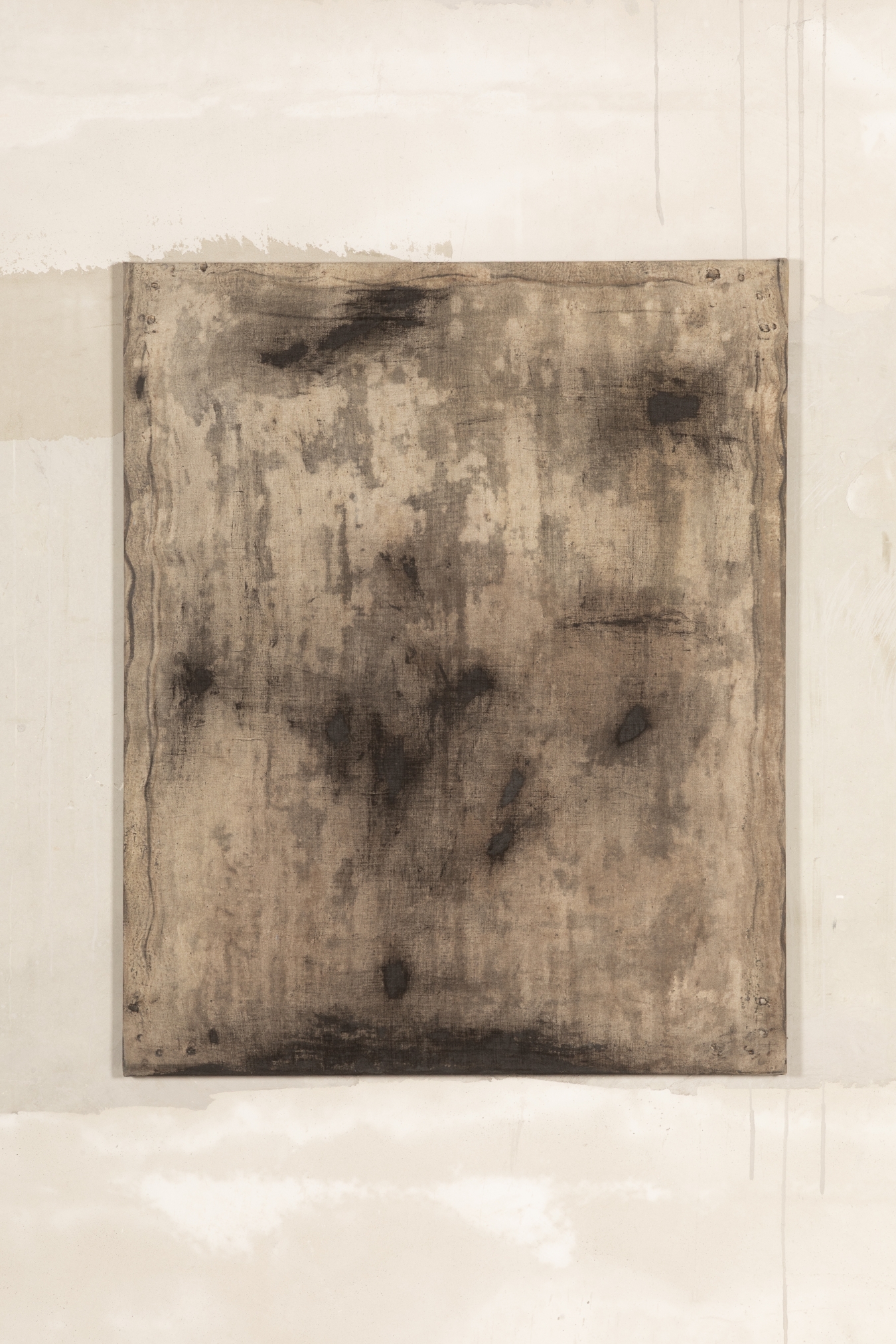
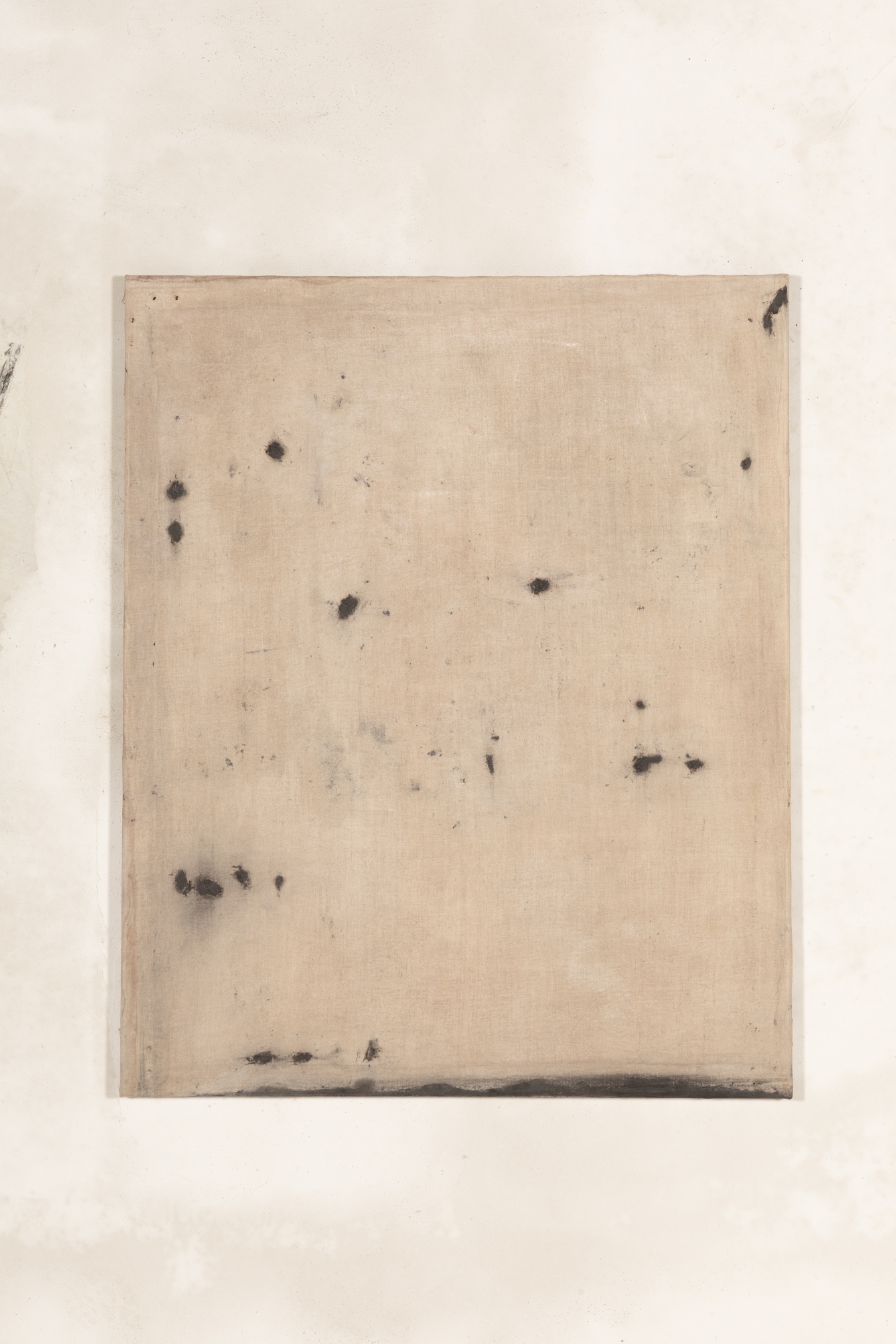
Maia Taber Ayerza tend du lin, verse de la colle de lapin, applique du pigment dans l’huile de noix, lave, recommence. Pendant des jours, l’échec. Puis quelque chose cède et crée quelque chose d’inédit entre elle et la matière.
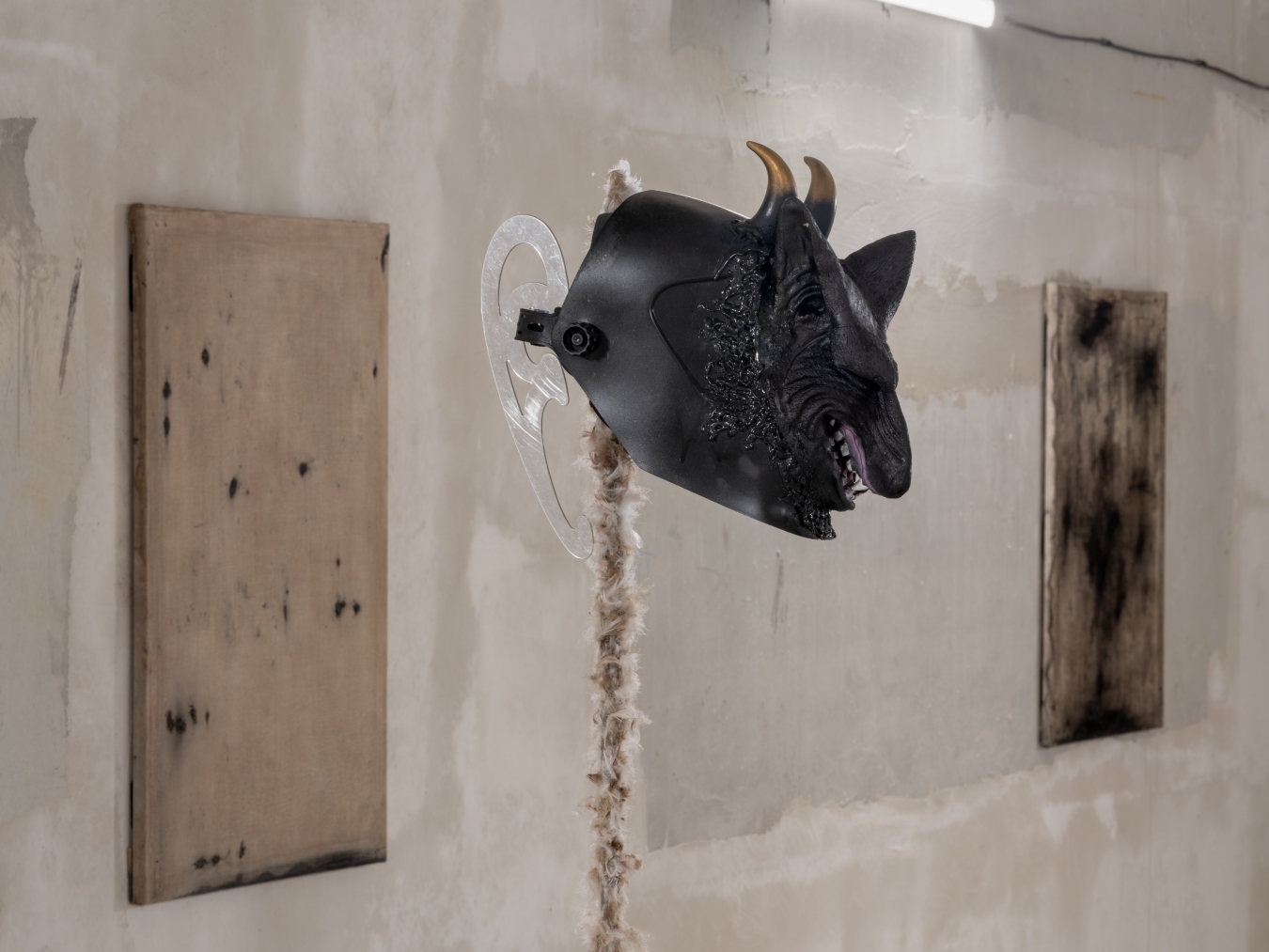
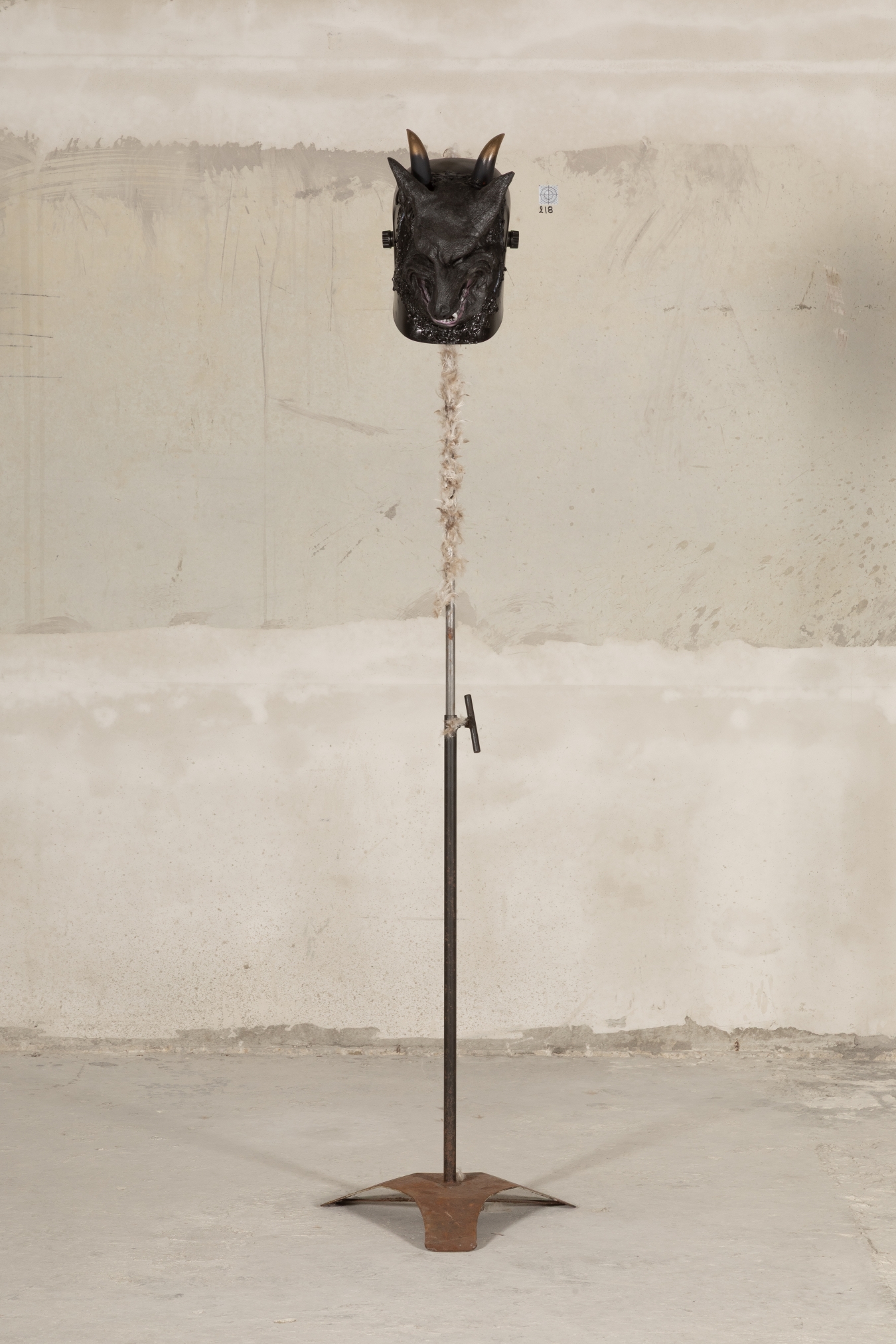
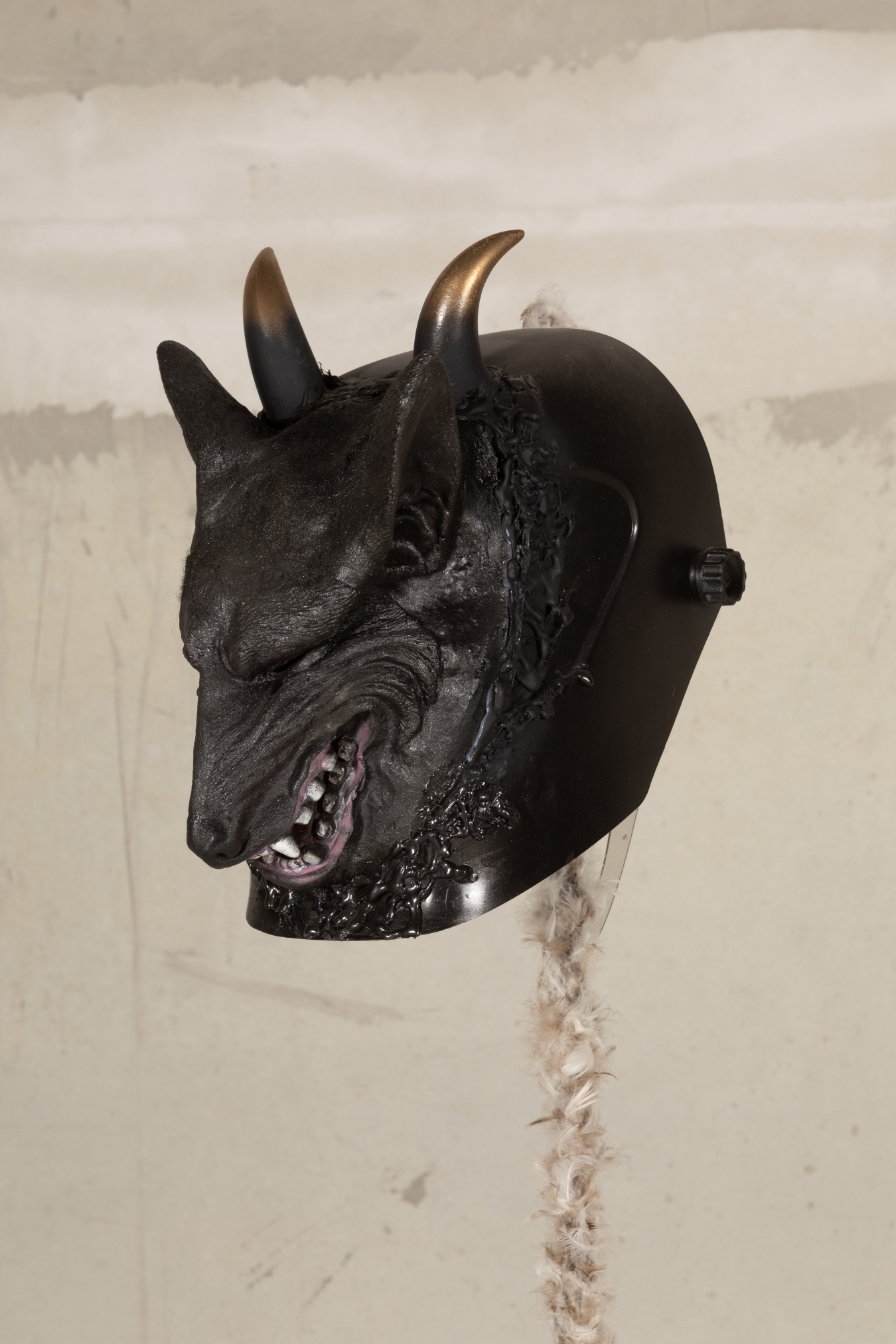
La sculpture de Ladji Diaby 19/06/2024, 205 associe un masque de soudeur, celui d’un chien, une tige
rouillée et dressée recouverte de plumes blanches. L’outil de travail devient support d’une créature mythique. Chaque chose aliénante peut, par une erreur de compréhension, devenir émancipatoire.
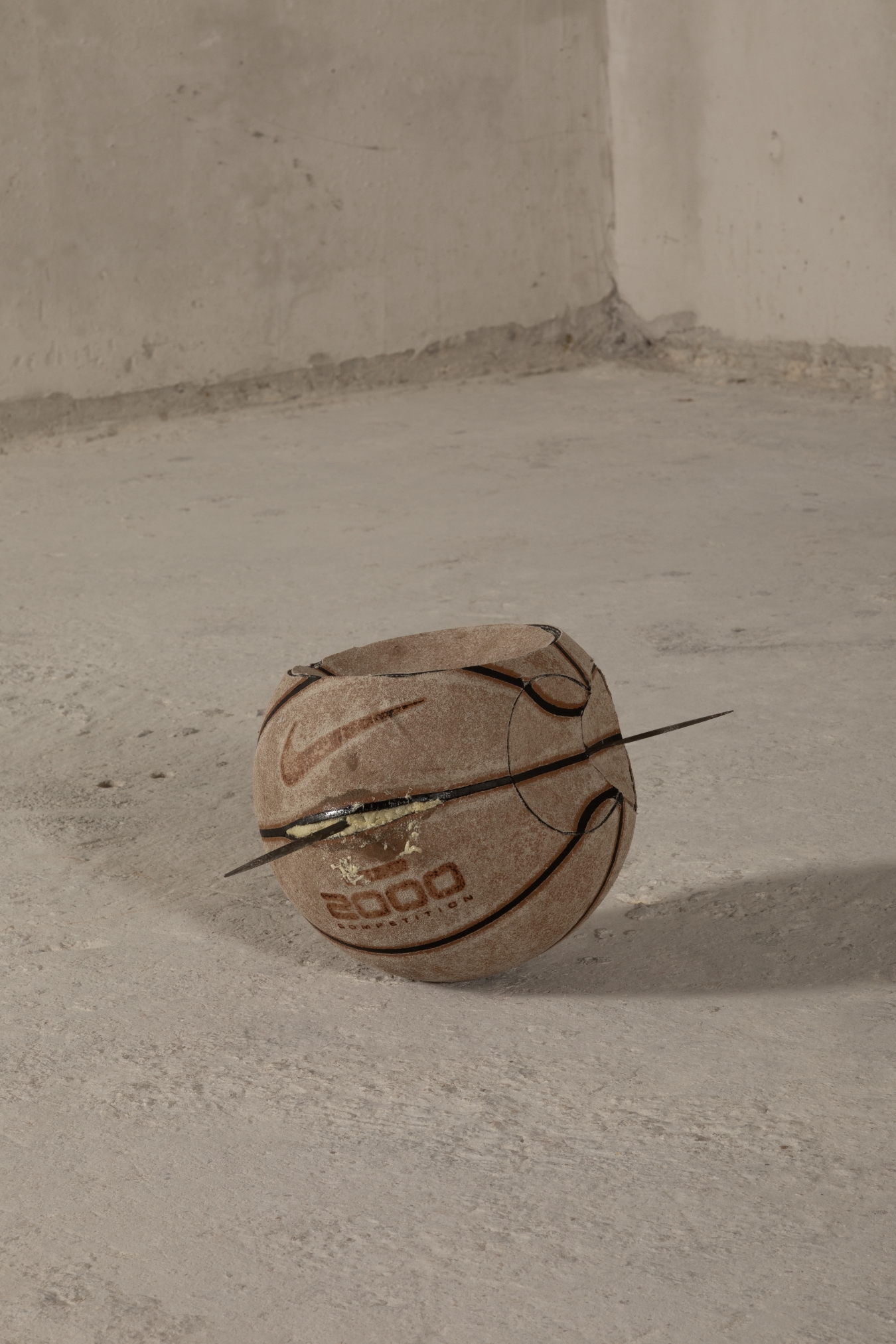
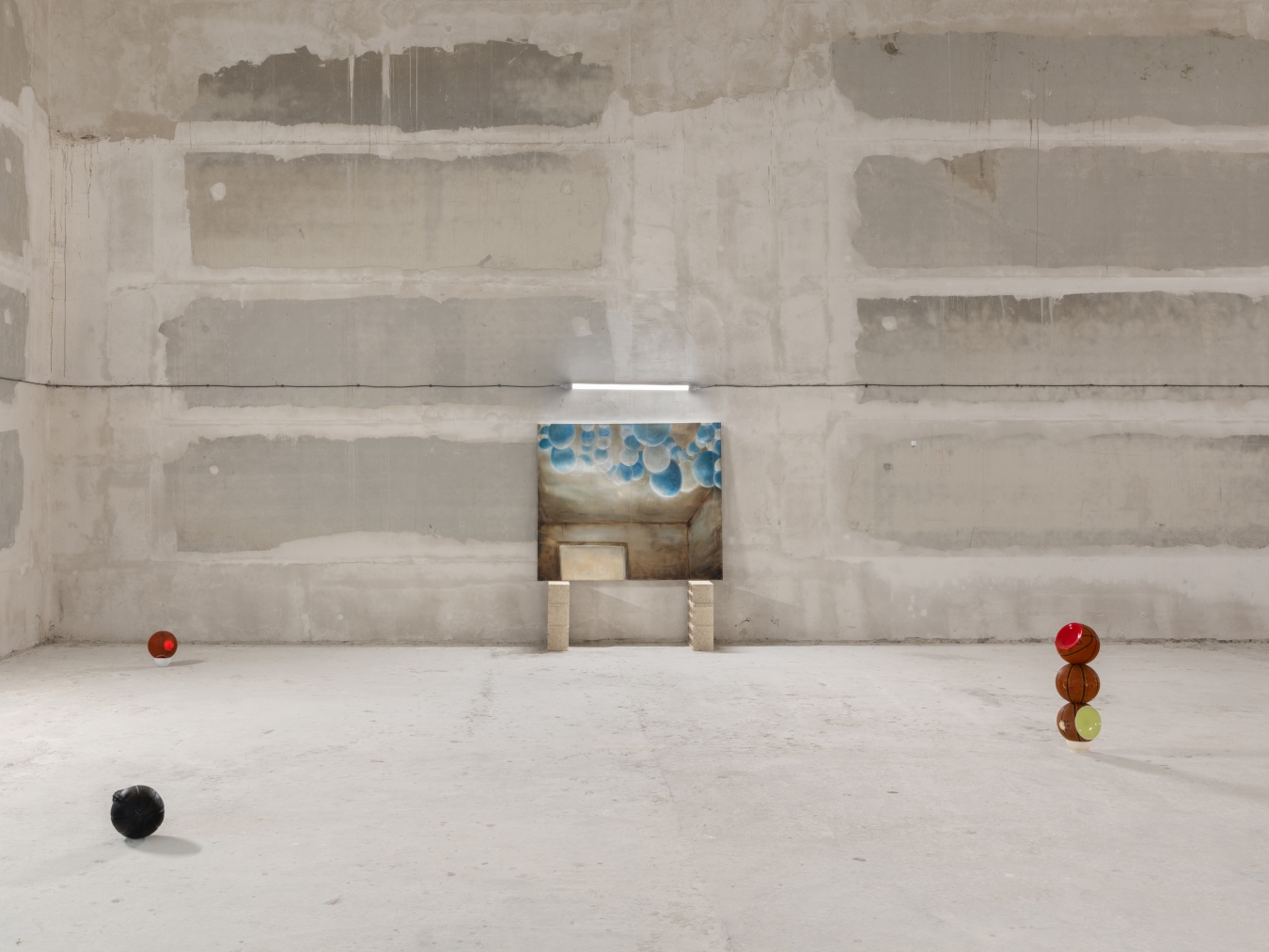
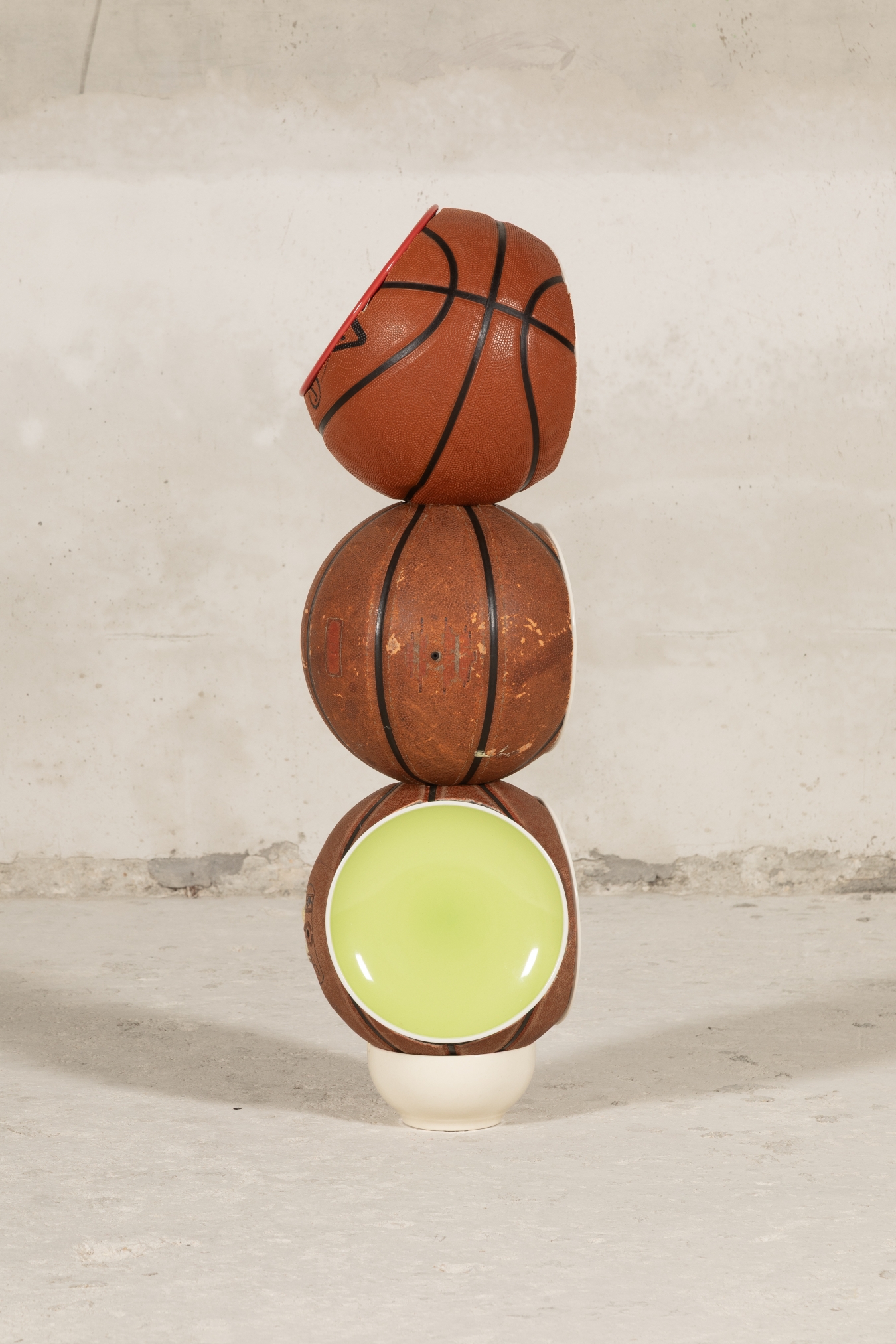
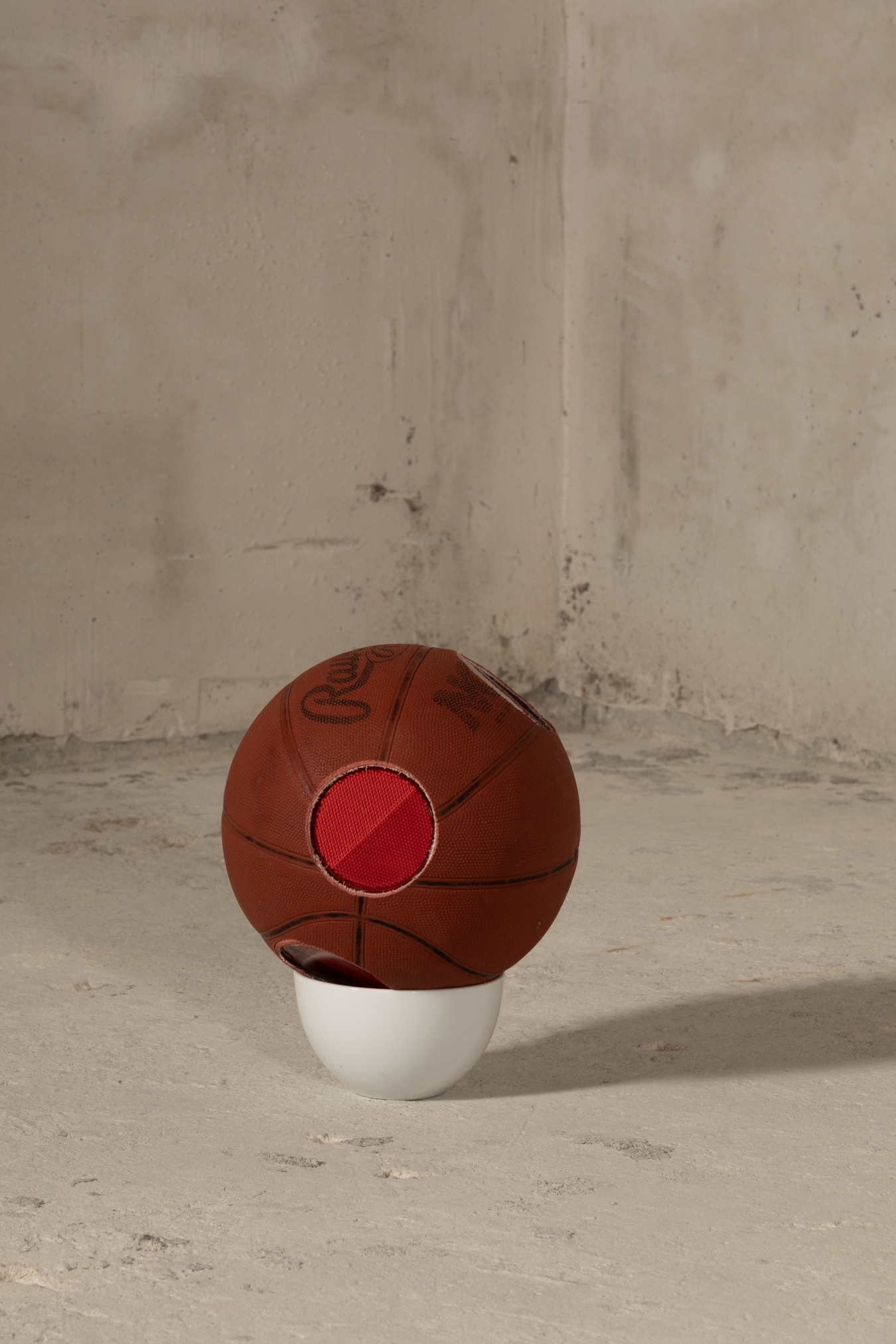
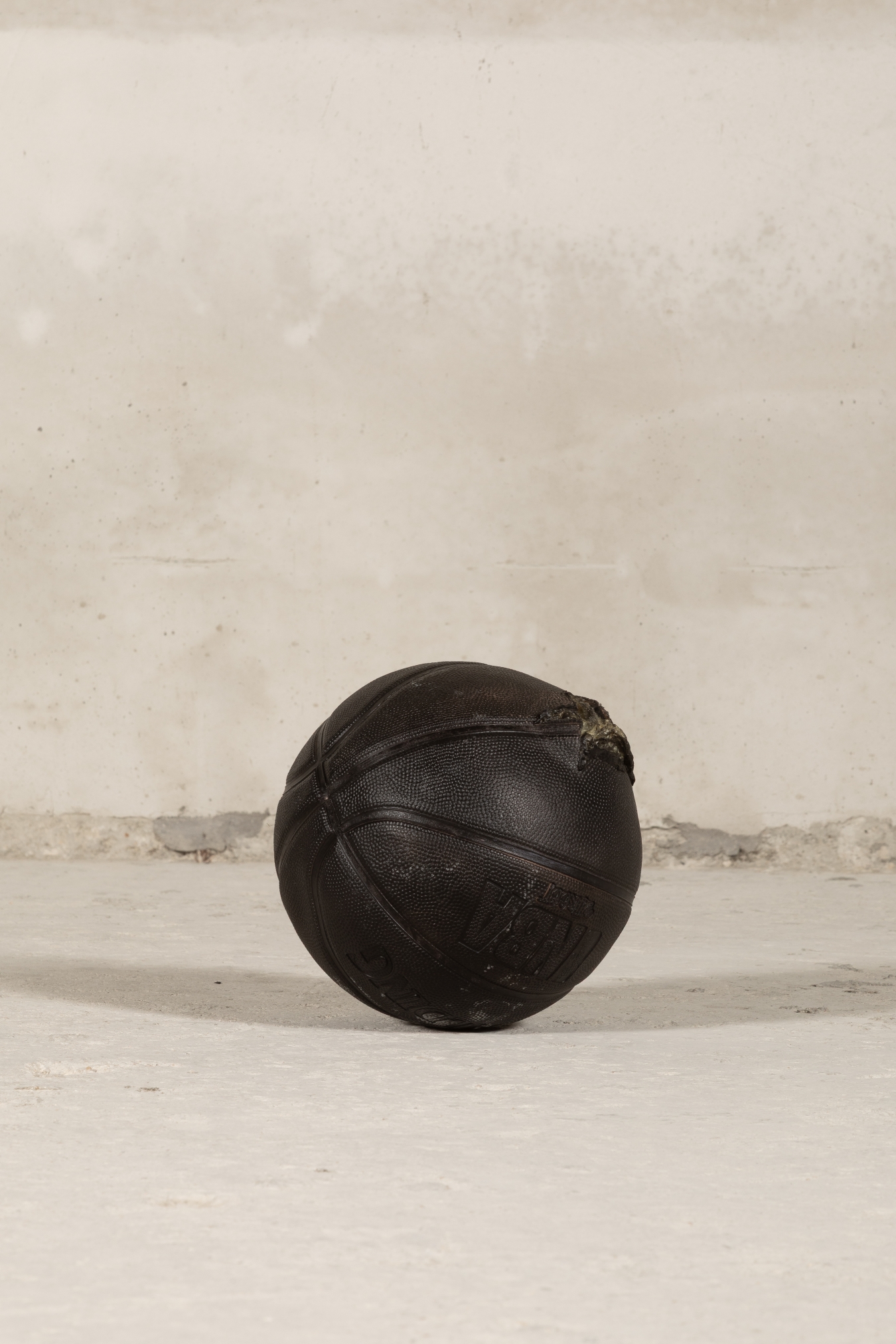
Michael E. Smith vient de Detroit. Ses basketballs usés, dégonflées puis regonflées à la mousse, traversés de tiges, ne rebondissent plus. Ils sont les reliques d’un monde où les objets ne fonctionnent plus comme prévu.
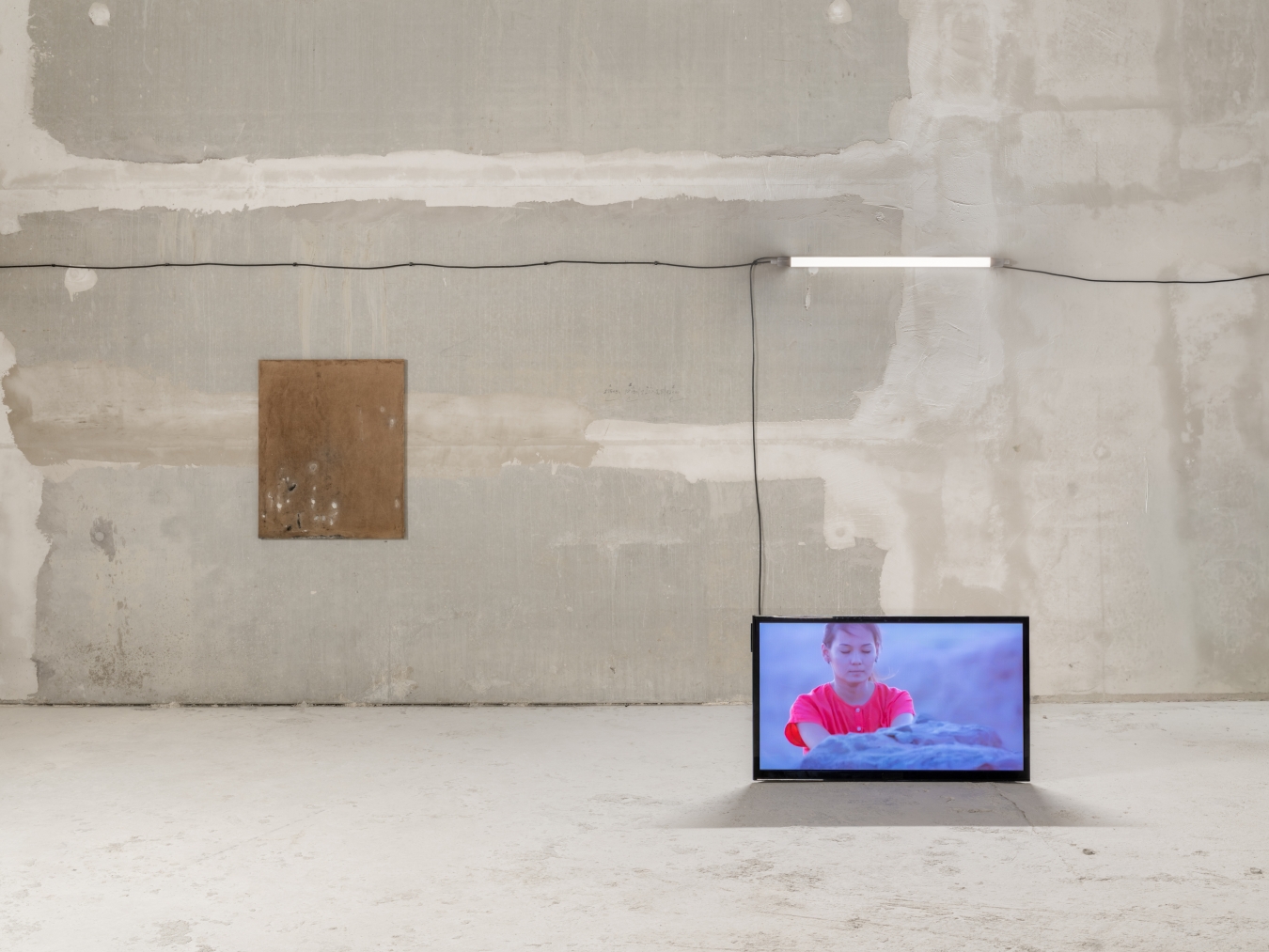
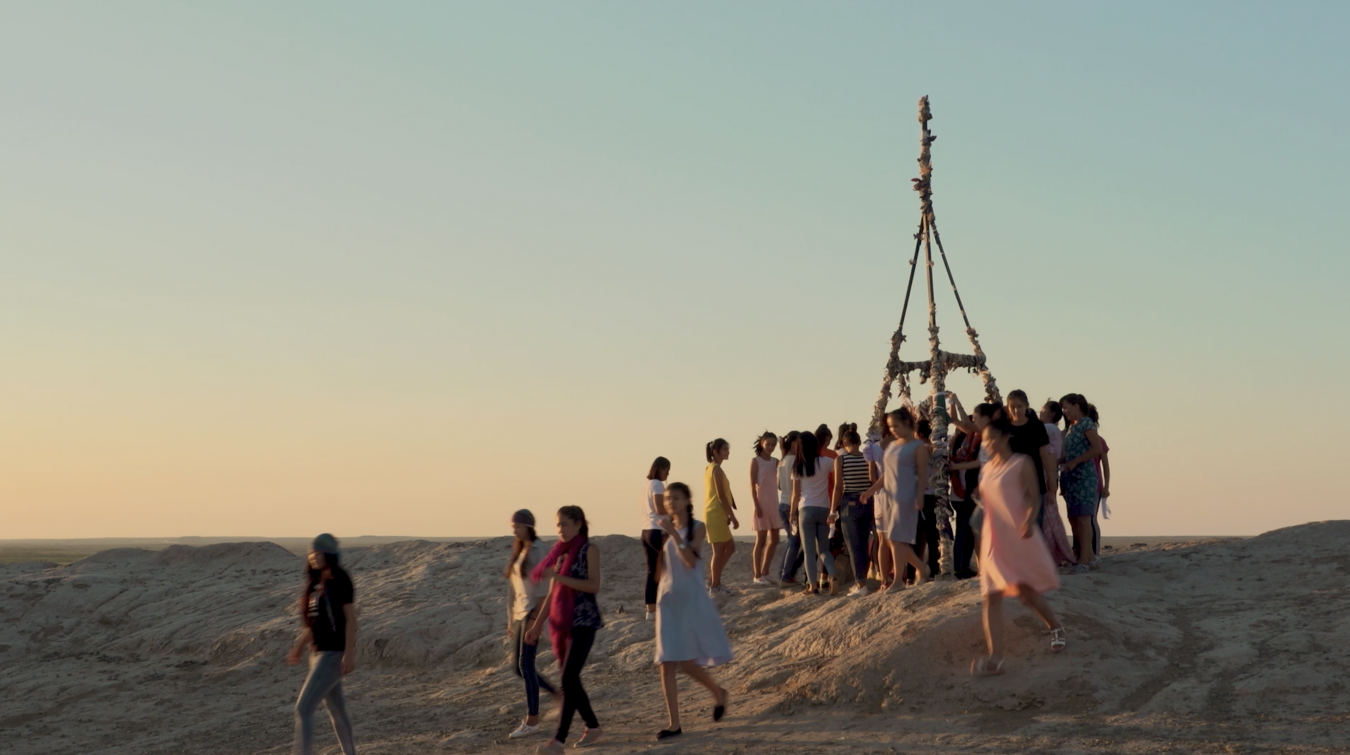
Saodat Ismailova filme des femmes autour d’un mât soviétique abandonné, sur un site de tombes dans le désert du Karakalpakstan, au coucher du soleil. Ce qu’elles transmettent n’a pas de nom. Mais le geste continue.
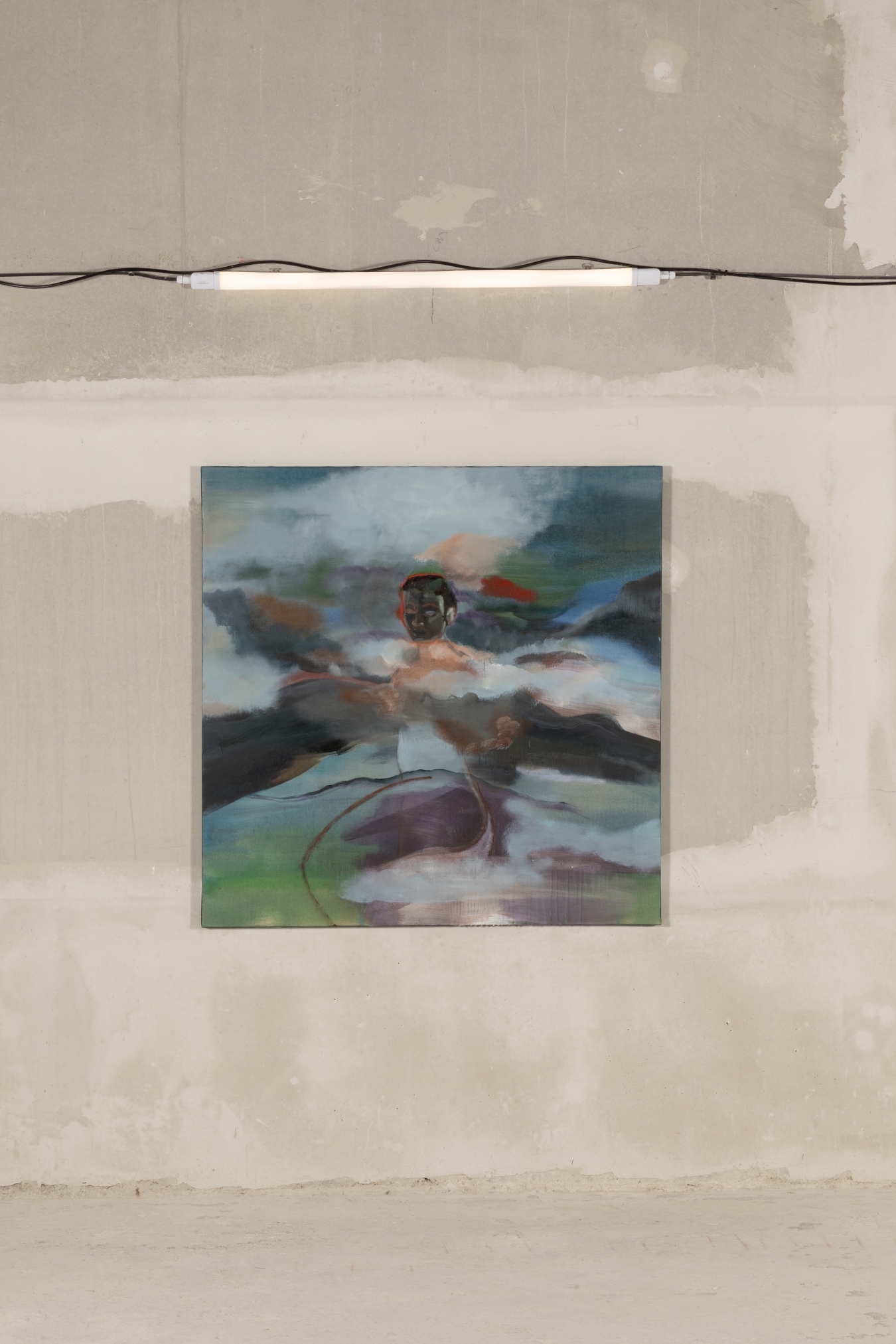
Dans la peinture d’Inès di Folco Jemni se dresse une forgeronne convoquant des mythologies plurielles, émanant d’une eau sombre et magnétique. Comme si la force venait de là, du fond.
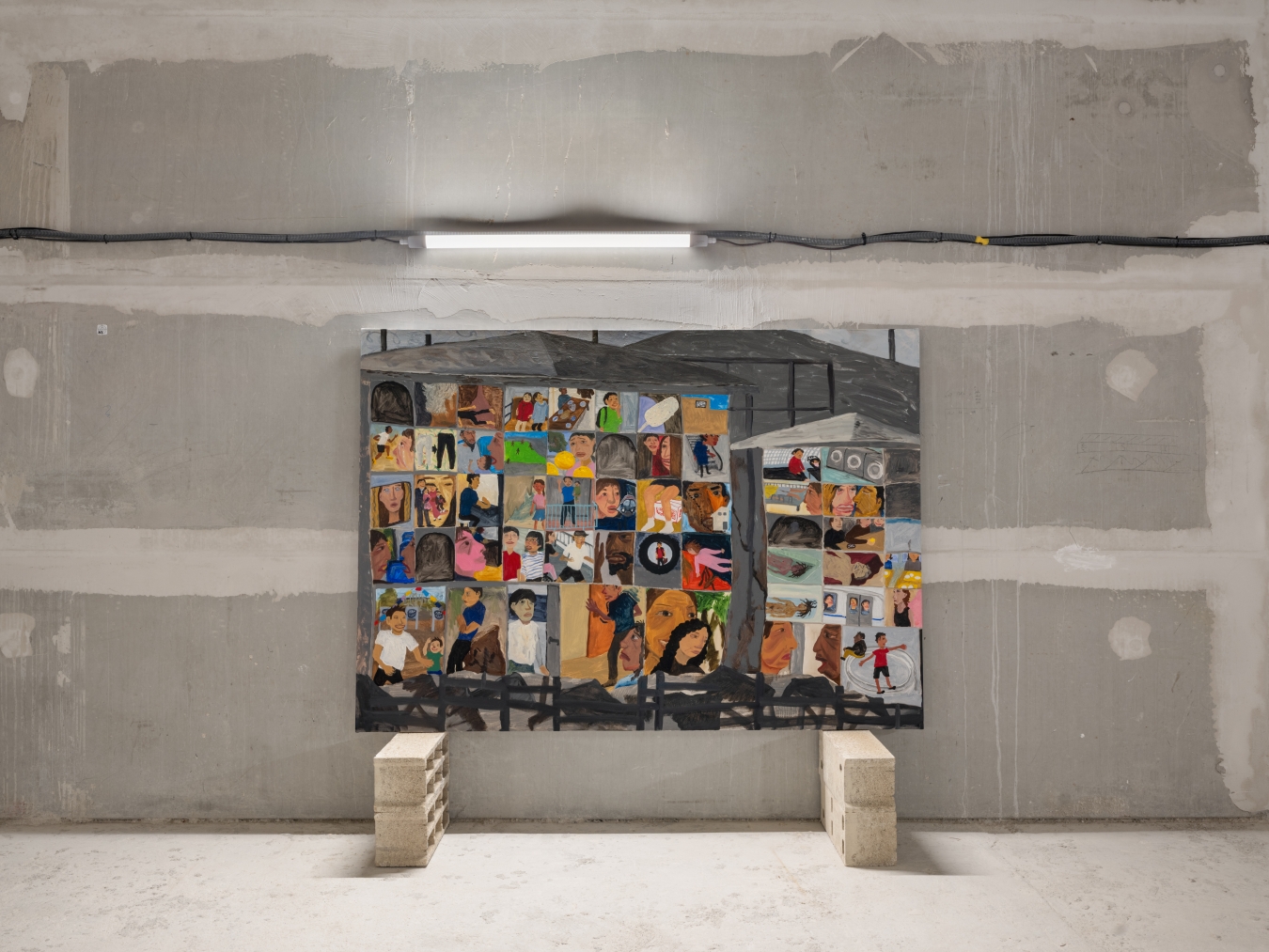
Kyoko Idetsu peint la ville où les mots ne passent plus, — mais la peint quand même, en grand. Ses personnages sont trop grands pour leurs décors, étrangers à leur propre environnement. Comme une cartographie de ce qui passe en dessous — les voix qu’on n’entend plus.
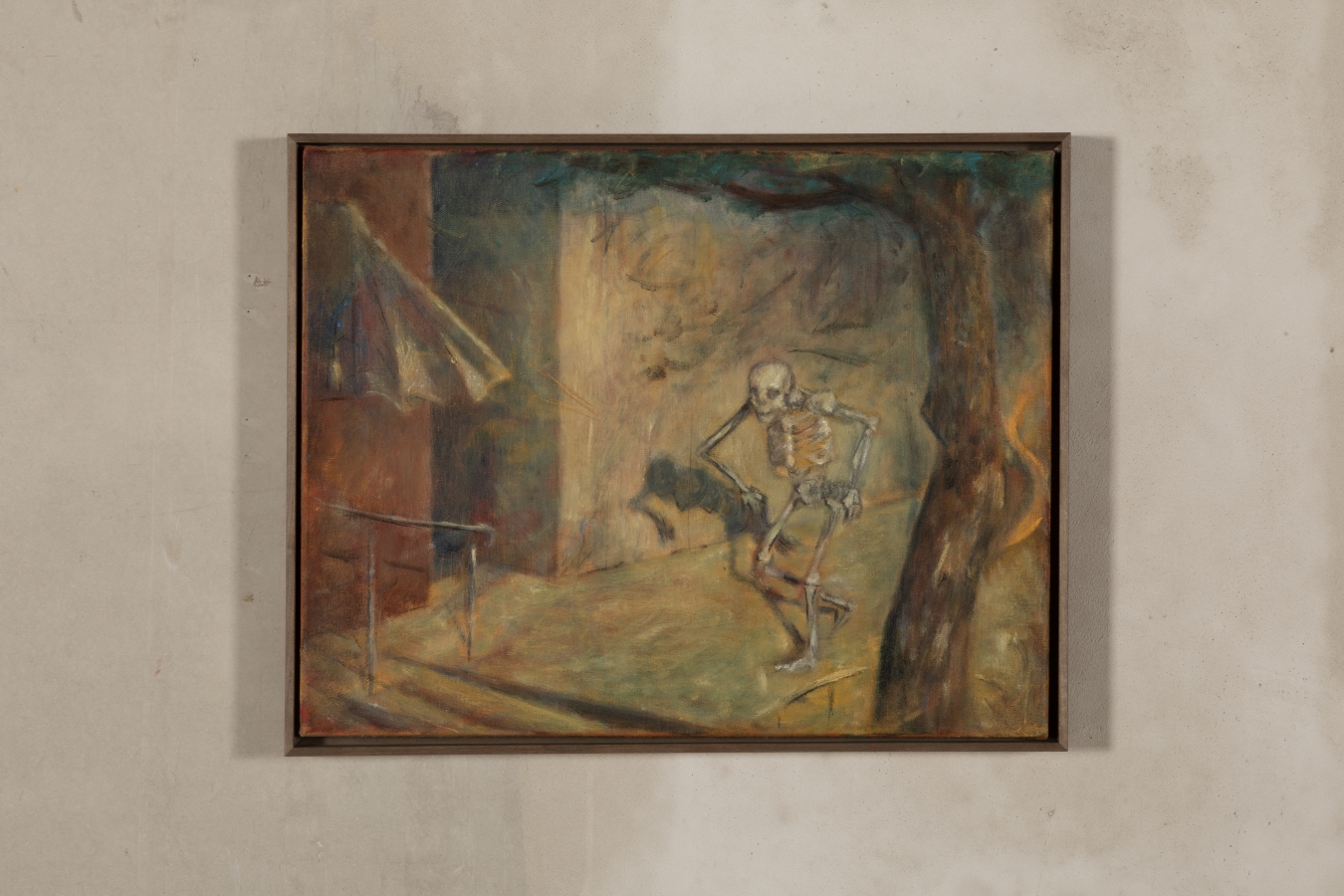
Ernst Yohji Jaeger peint un squelette qui court dans la nuit - à mi-chemin entre figure de tarot et personnage d’animé, semblant convoquer deux mondes qui ne sont pas censés se toucher.
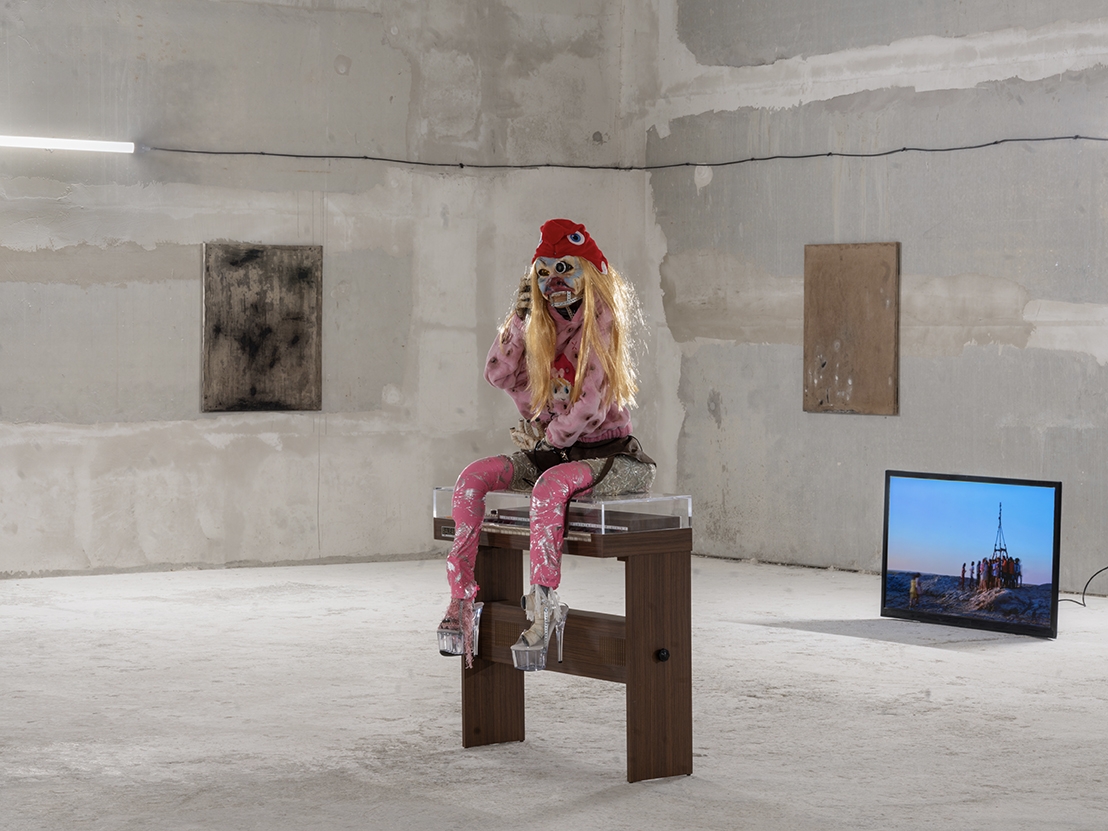
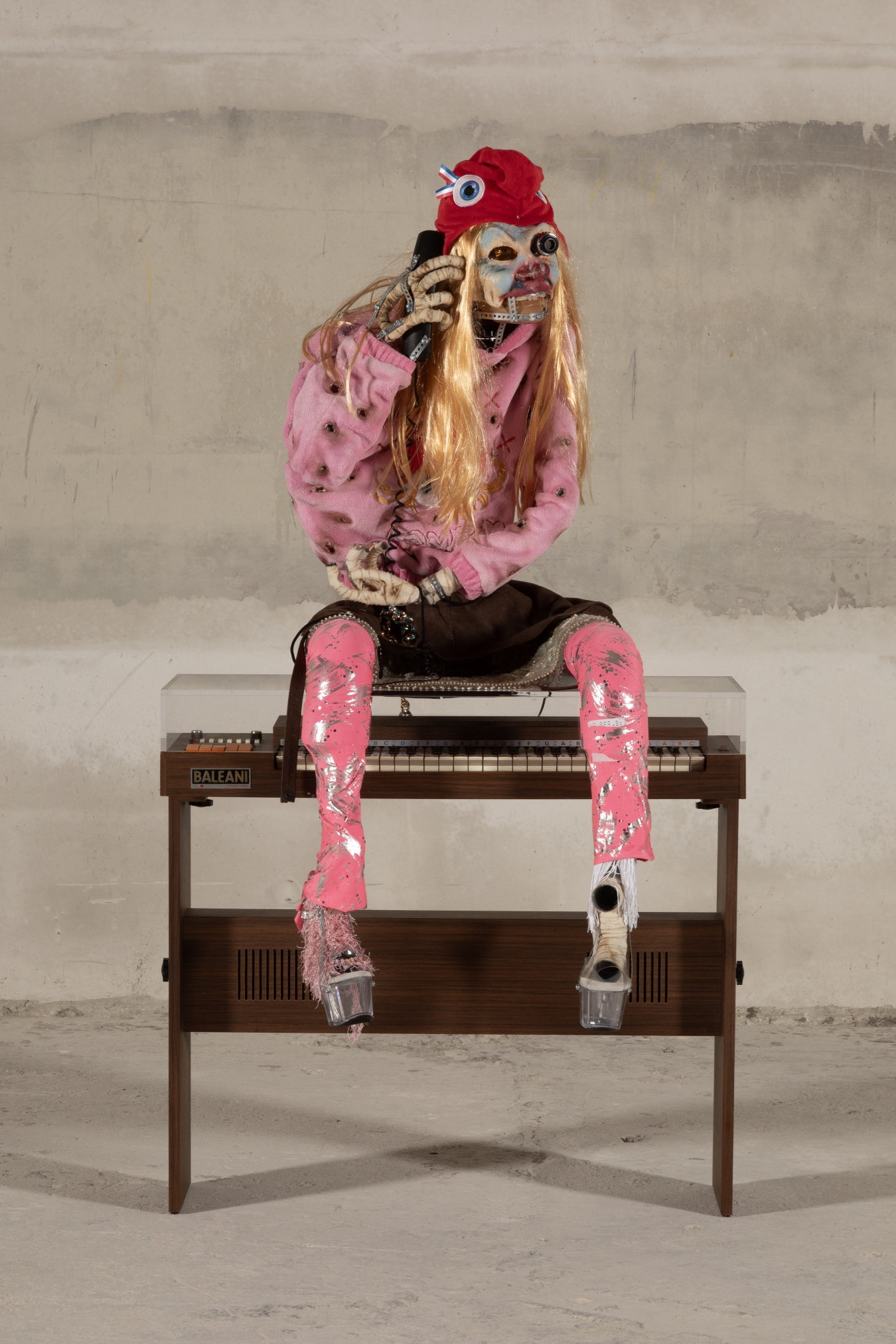
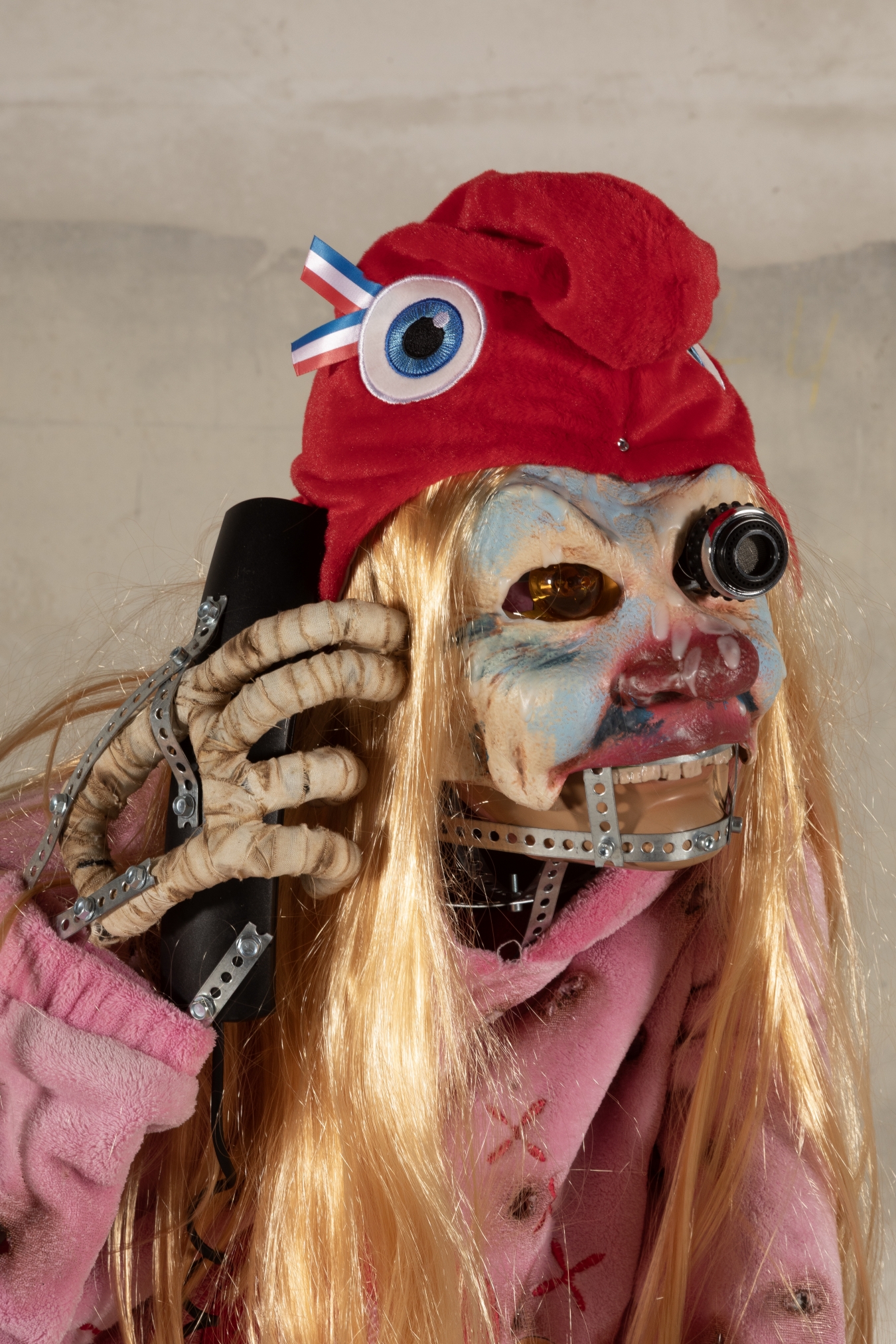
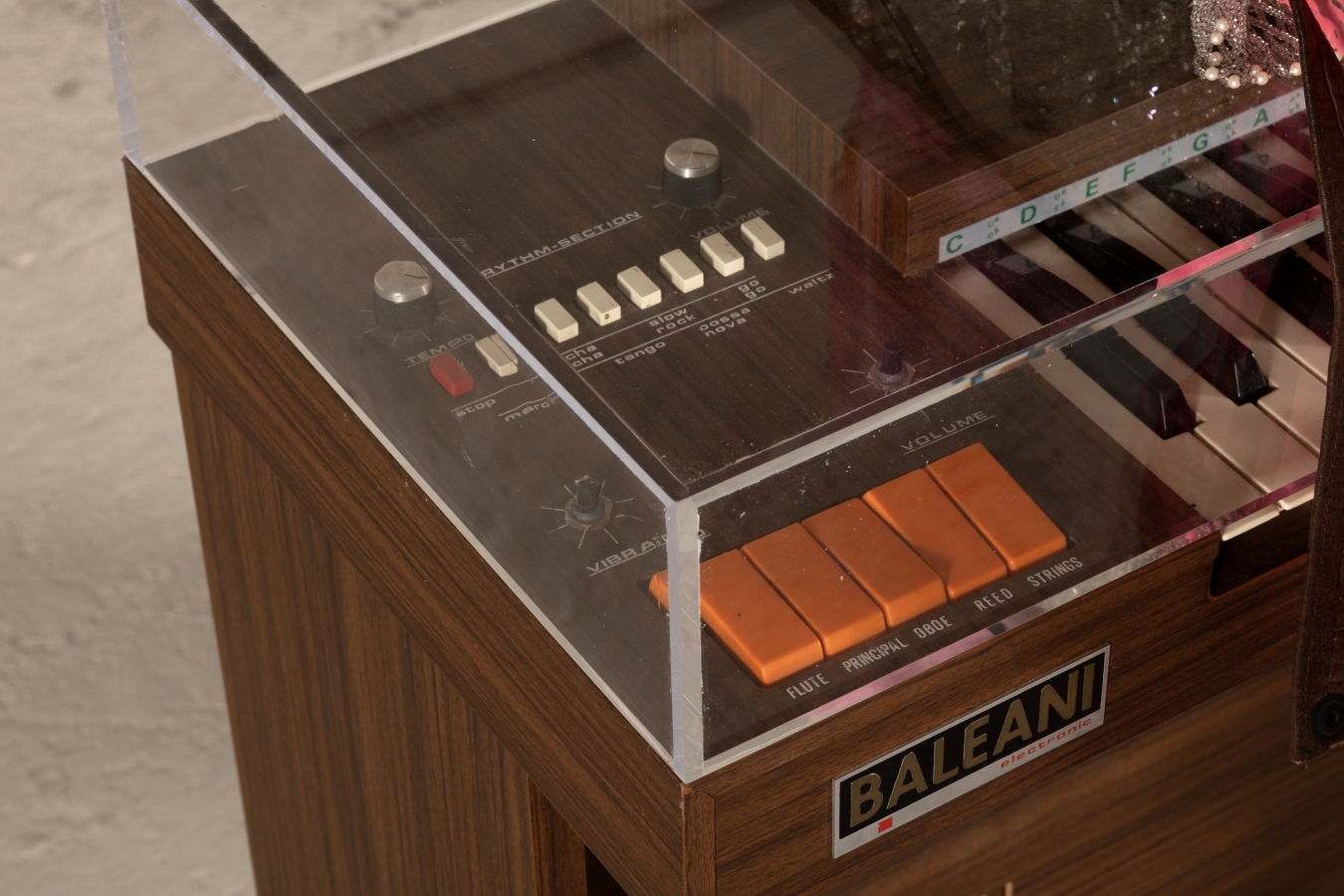
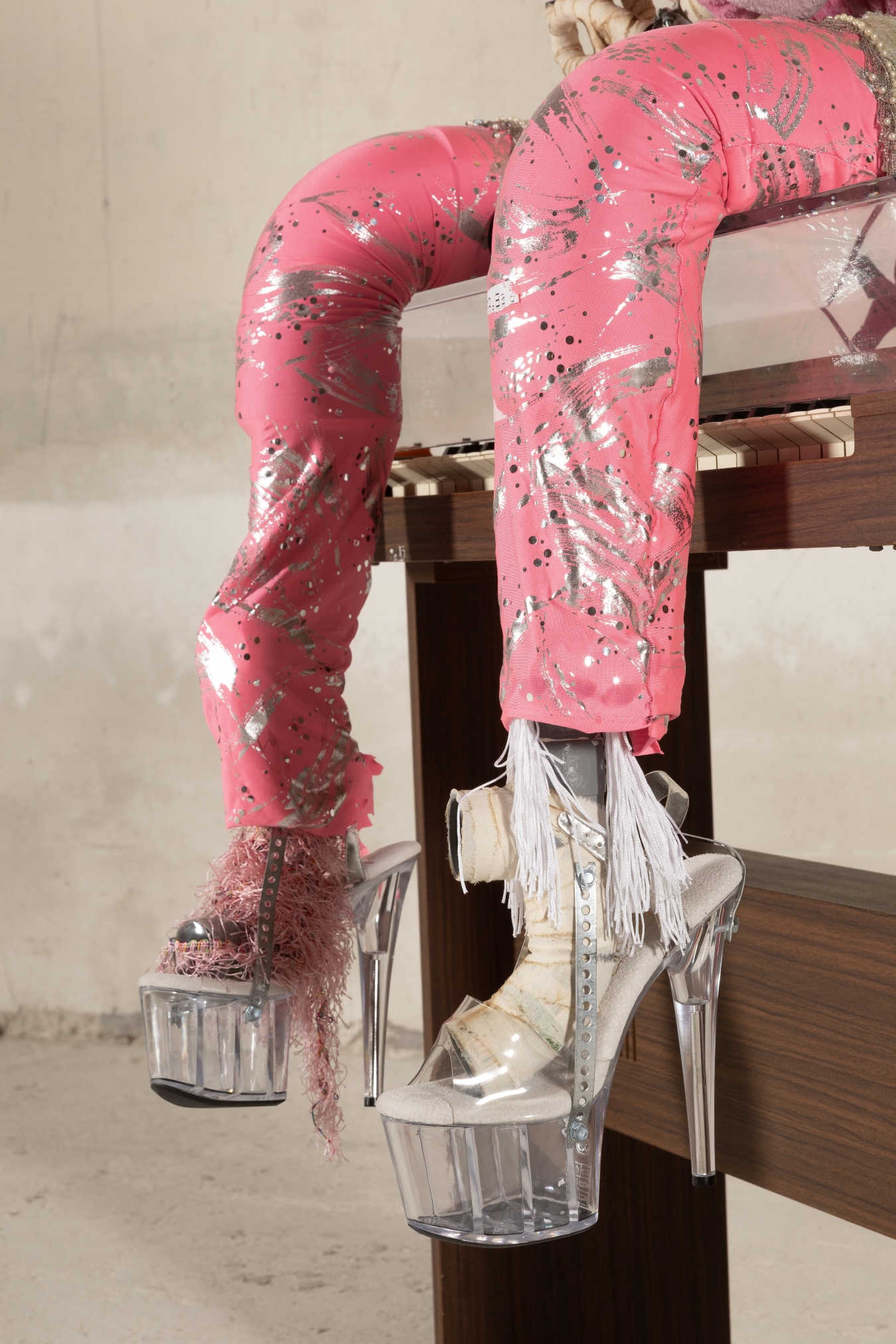
Renaud Jerez a réalisé une sculpture en écho à ce contexte. Coiffée du bonnet phrygien des JO 2024, une créature est au téléphone, assise sur un clavier de piano, collants fuschia, chaussures à plateforme plus démonstratives que les escarpins de Cendrillon. La Nation en représentation.
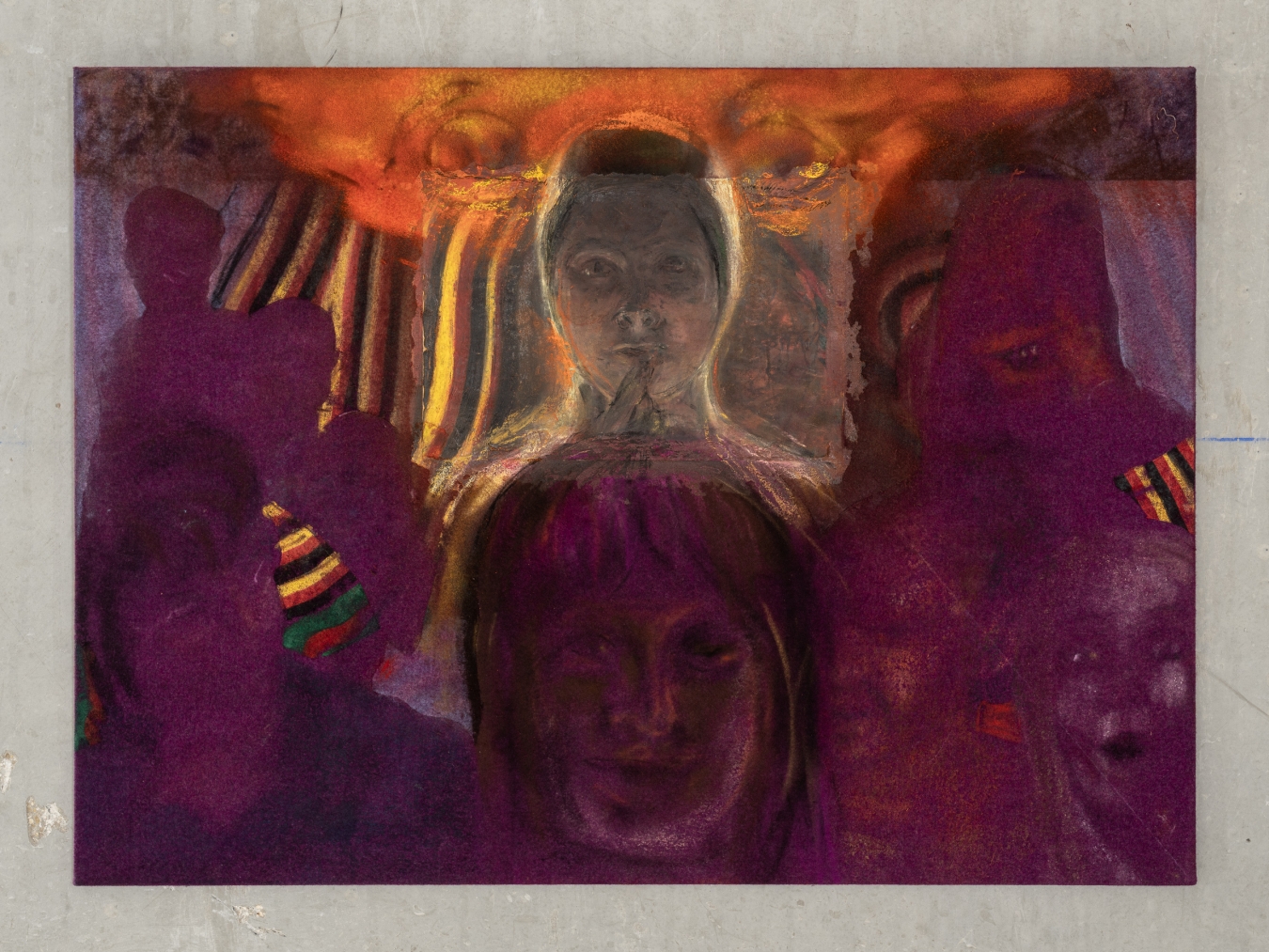
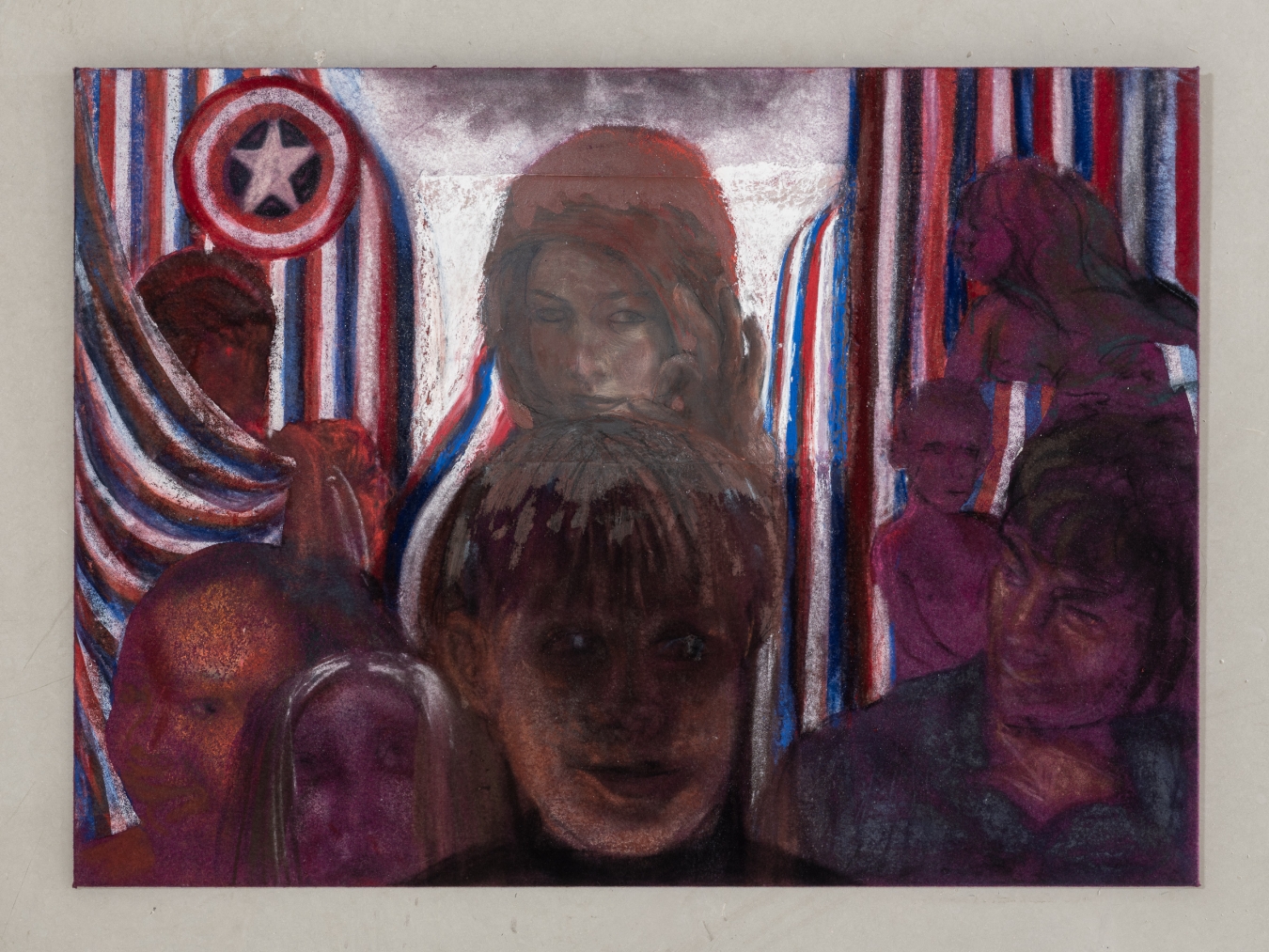
Deux versions (gauche et droite) de Songs from the underground de Stanislava Kovalčíková : pastels sur papier de verre et sur feutre. Des surfaces qui griffent et qui absorbent. Ce sont des portraits d’une violente beauté, qui absorbent une fiction de masse et savent s’en émanciper.
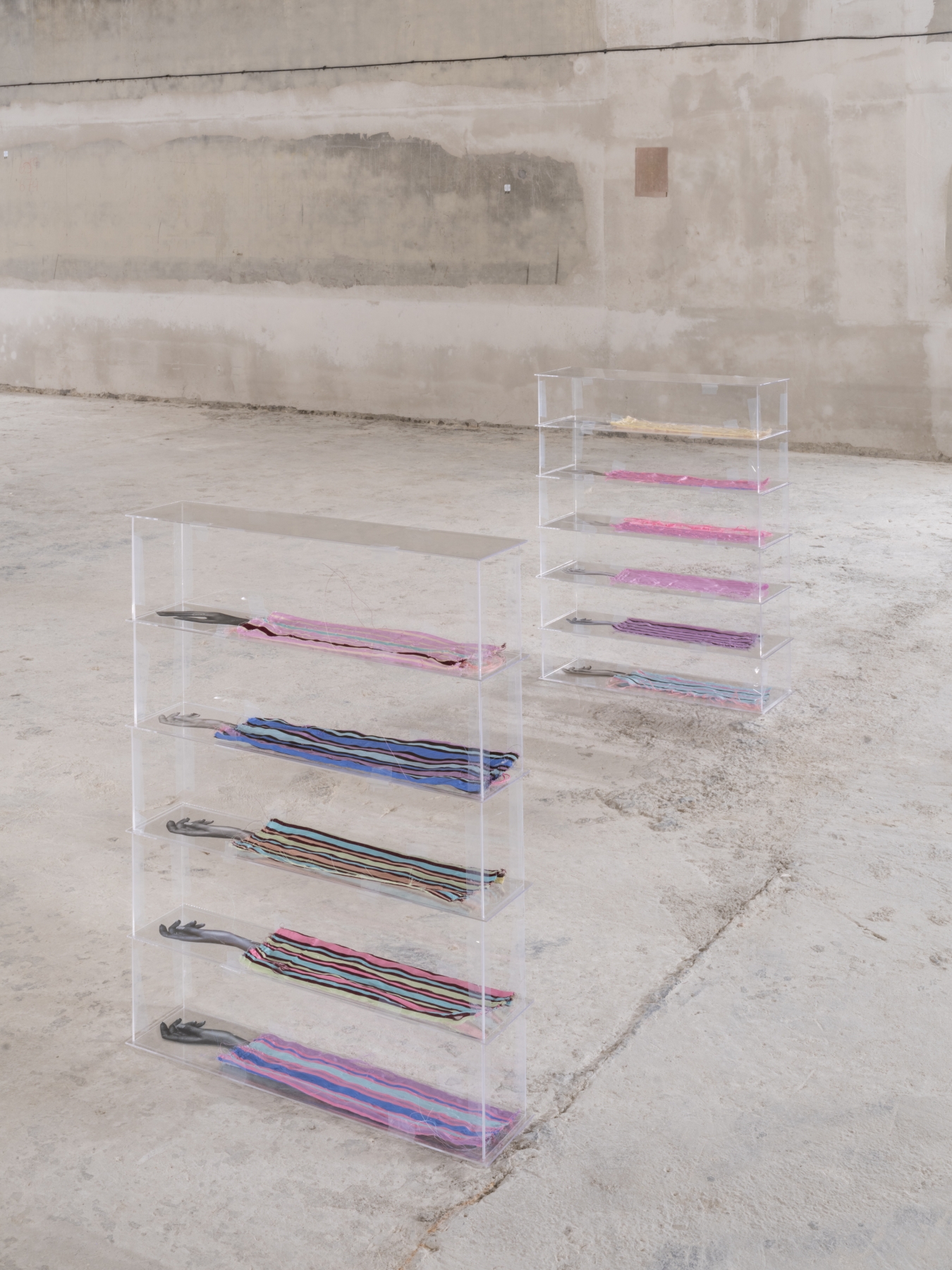
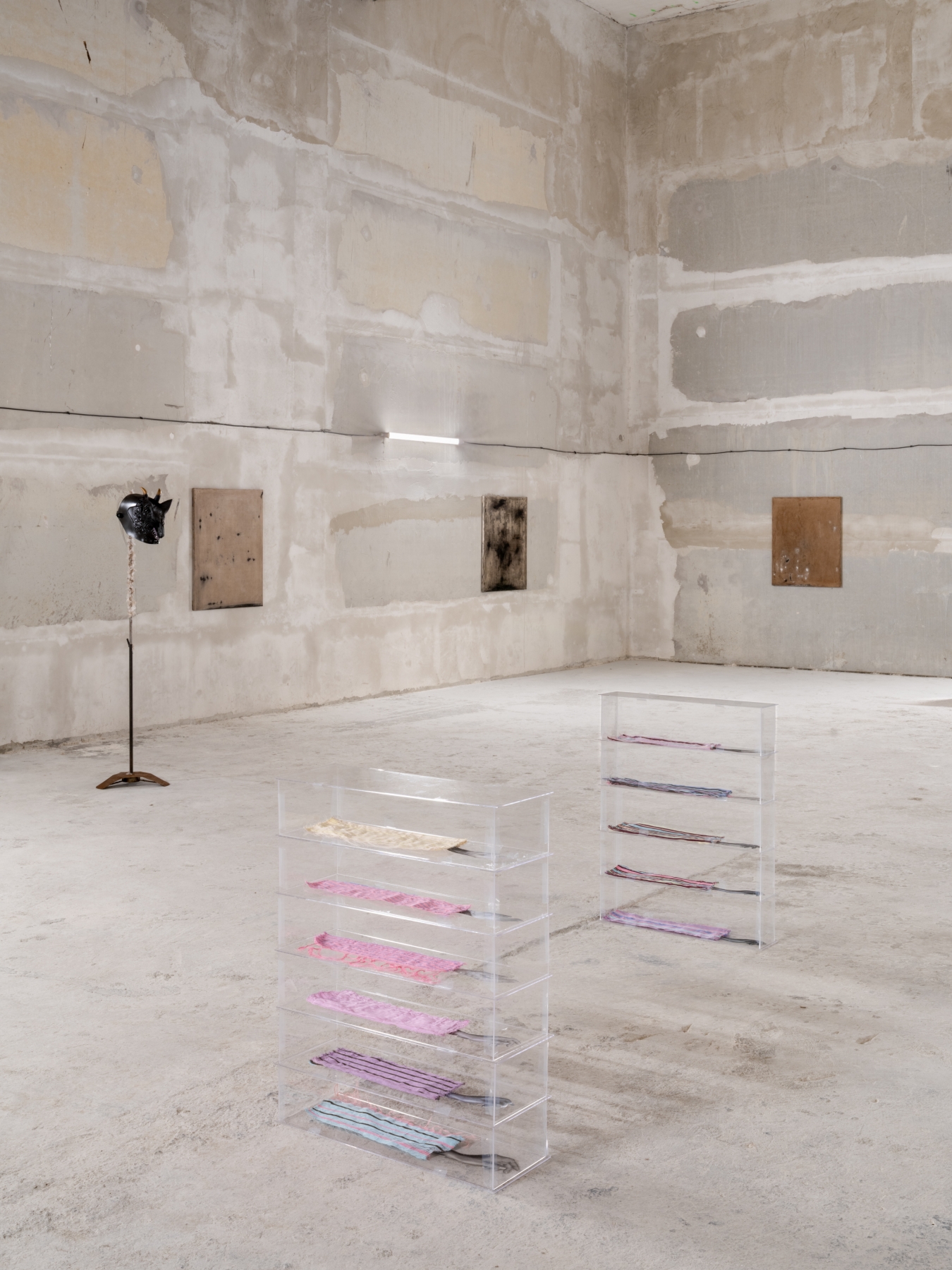
Il y a dans les vitrines d’Anne Bourse un jeu de mimétisme. L’artiste fictionnalise une boutique de montres, une boutique de manches. Faites avec des pages jaunes d’annuaire, et des fils tissés mains. Nous sommes faits de choses autant que nous les faisons, dit-elle.
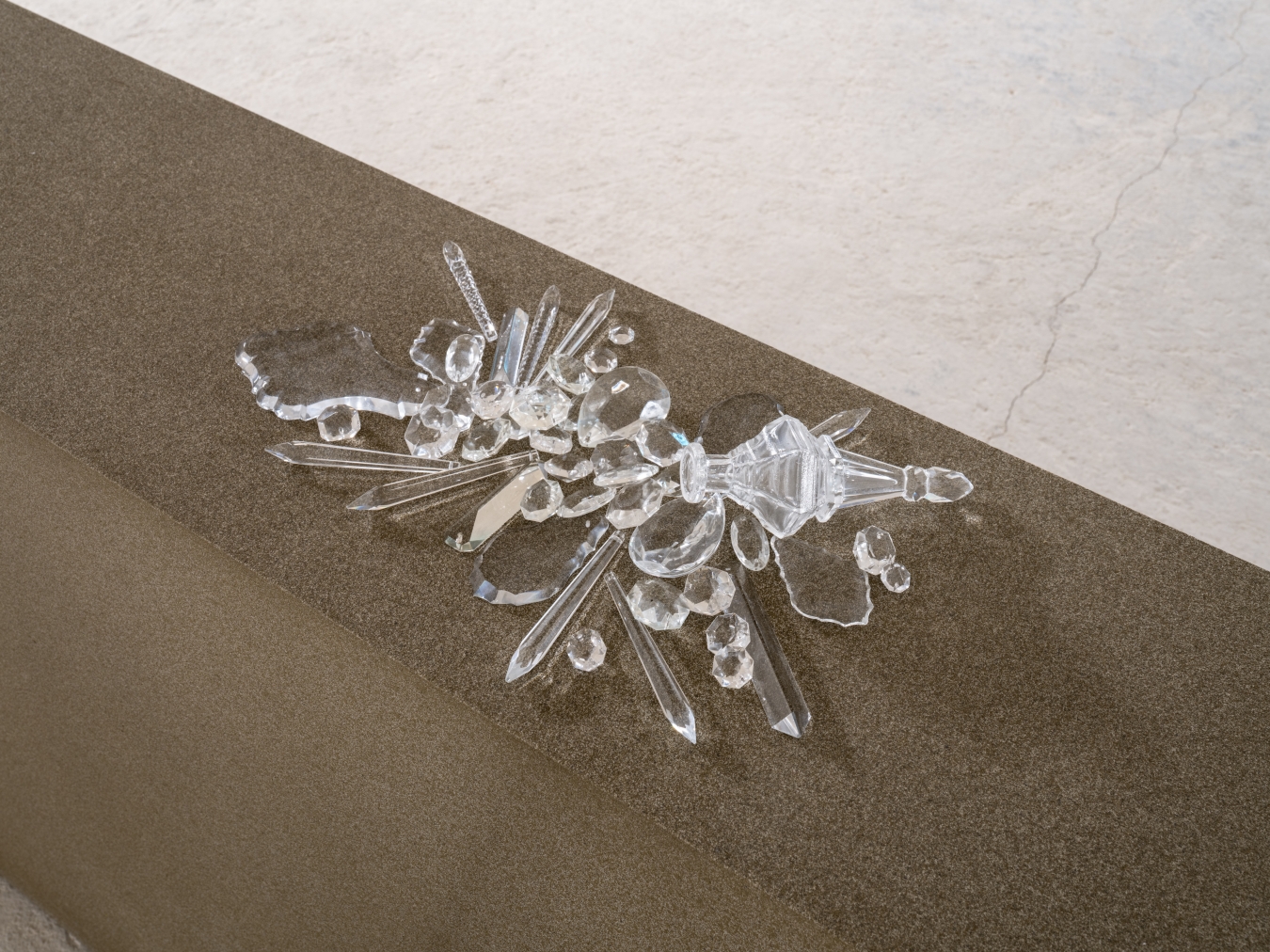
Le modernisme a purgé le décoratif, éliminé l’ornement. Isabelle Cornaro déjoue le piédestal conceptuel en y disposant de petites décorations en prétendu cristal.
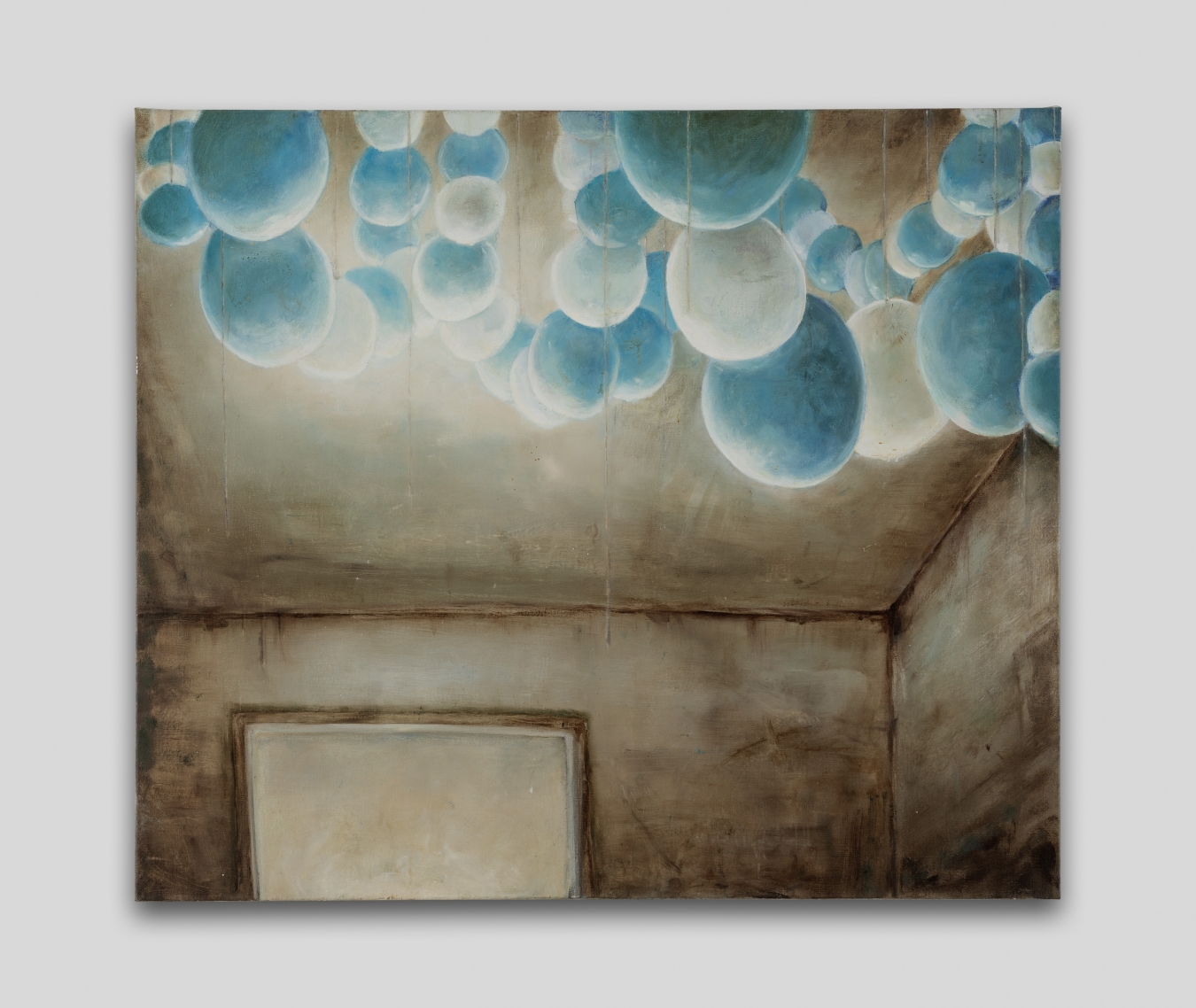
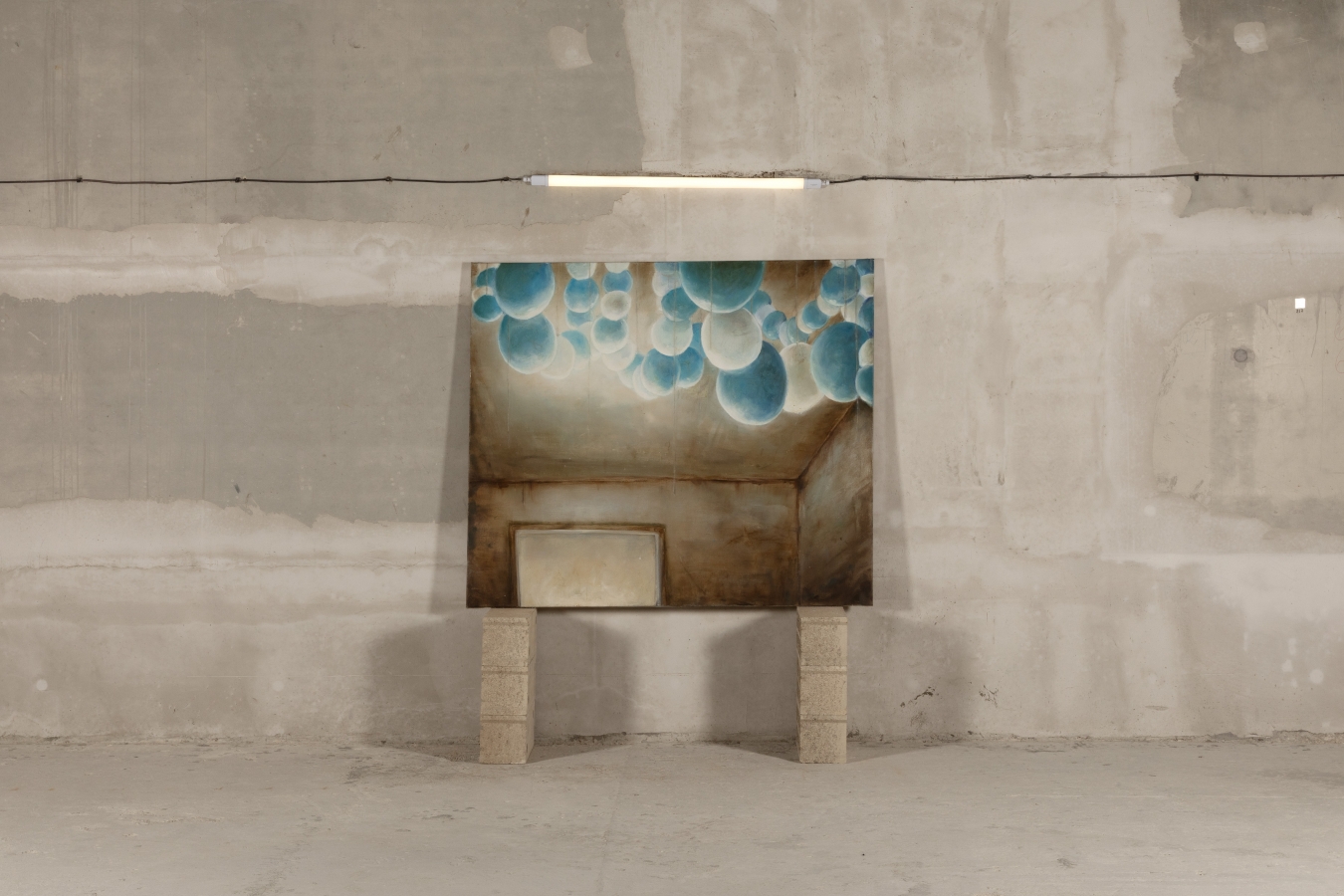
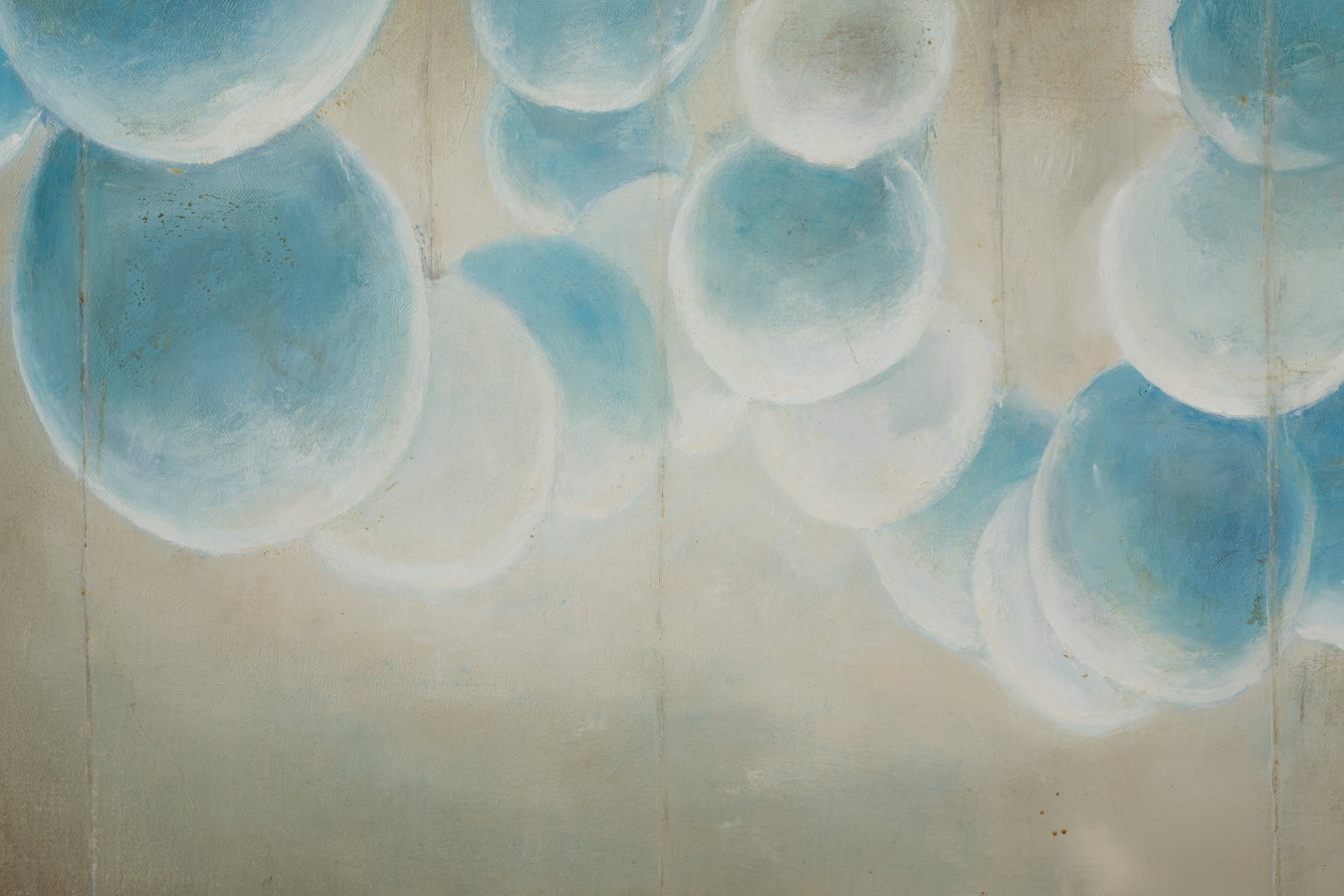
Dans la peinture de Cristof Yvoré, le cadre contient à peine les ballons bleus du plafond. Aucune présence humaine, et pourtant : plus l’humain est absent, plus sa présence se fait sentir. Les ballons bleus sont peut-être comme des bulles : des coques fragiles ou deux sphères peuvent coexister.
Seize secondes de reverbe. Le son s’attarde, les oeuvres aussi.
Ce n’est pas grand-chose. Le monde restera fou.1
I. Baptiste Morizot, Le regard perdu : à l’origine de l’article pariétal animal, 2025, Acte Sud.
 Loading
  Loading
 Exhibition view, Ultra-Cave, Paris, 2026.
 Loading
 Exhibition view, Ultra-Cave, Paris, 2026.
 Loading
 Renaud Jerez, Marianne I, 2026, PVC pipes, hardware supplies, oil, fabric, Plexiglas, found objects, Baleani piano, 172 × 93 × 30 cm.
 Loading
 Renaud Jerez, Marianne I, 2026, PVC pipes, hardware supplies, oil, fabric, Plexiglas, found objects, Baleani piano, 172 × 93 × 30 cm. (detail)
 Loading
 Renaud Jerez, Marianne I, 2026, PVC pipes, hardware supplies, oil, fabric, Plexiglas, found objects, Baleani piano, 172 × 93 × 30 cm. (detail)
 Loading
 Renaud Jerez, Marianne I, 2026, PVC pipes, hardware supplies, oil, fabric, Plexiglas, found objects, Baleani piano, 172 × 93 × 30 cm. (detail)
 Loading
 Exhibition view, Ultra-Cave, Paris, 2026.
 Loading
 Saodat Ismailova, Chillpiq, 2018, Single-channel HD video, stereo, 17’.
 Loading
 Exhibition view, Ultra-Cave, Paris, 2026.
 Loading
 Maia Taber Ayerza, Untitled, 2026, distemper and oil on linen, 96,5 × 78,7 × 1,9 cm.
 Loading
 Maia Taber Ayerza, Untitled, 2026, distemper and oil on linen, 96,5 × 78,7 × 1,9 cm.
 Loading
 Exhibition view, *Ultra-Cave, Paris, 2026.
 Loading
 Ladji Diaby, 19/06/2024, 205, 2026, welding mask, dog mask, steel stand, goose feathers, aerosol, acrylic, 179 × 10 ×10 cm.
 Loading
 Ladji Diaby, 19/06/2024, 205, 2026, welding mask, dog mask, steel stand, goose feathers, aerosol, acrylic, 179 × 10 ×10 cm. (detail)
 Loading
 Exhibition view, Ultra-Cave, Paris, 2026.
 Loading
 Exhibition view, Ultra-Cave, Paris, 2026.
 Loading
 Michael E. Smith, Untitled, 2025, basketball, wire, stuffing, foam, 20 × 24 × 20 cm.
 Loading
 Ernst Yohji Jaeger, Untitled, 2021, oil on canvas, 45 × 35 cm.
 Loading
 Exhibition view, Ultra-Cave, Paris, 2026.
 Loading
 Anne Bourse, Sketch for Summer (2 & 3), 2025, acrylic glass, adhesive tape, printed paper, handmade fabric, 93 × 72 × 25 cm.
 Loading
 Exhibition view, Ultra-Cave, Paris, 2026.
 Loading
 Exhibition view, Ultra-Cave, Paris, 2026.
 Loading
 Exhibition view, Ultra-Cave, Paris, 2026.
 Loading
 Cristof Yvoré, Untitled, 2008, oil on canvas, 145,5 × 169,5 cm.
 Loading
 Cristof Yvoré, Untitled, 2008, oil on canvas, 145,5 × 169,5 cm. (detail)
 Loading
 Michael E. Smith, Untitled, 2025, baskeballs, dishes, foam, 76 × 23 × 23 cm.
 Loading
 Exhibition view, Ultra-Cave, Paris, 2026.
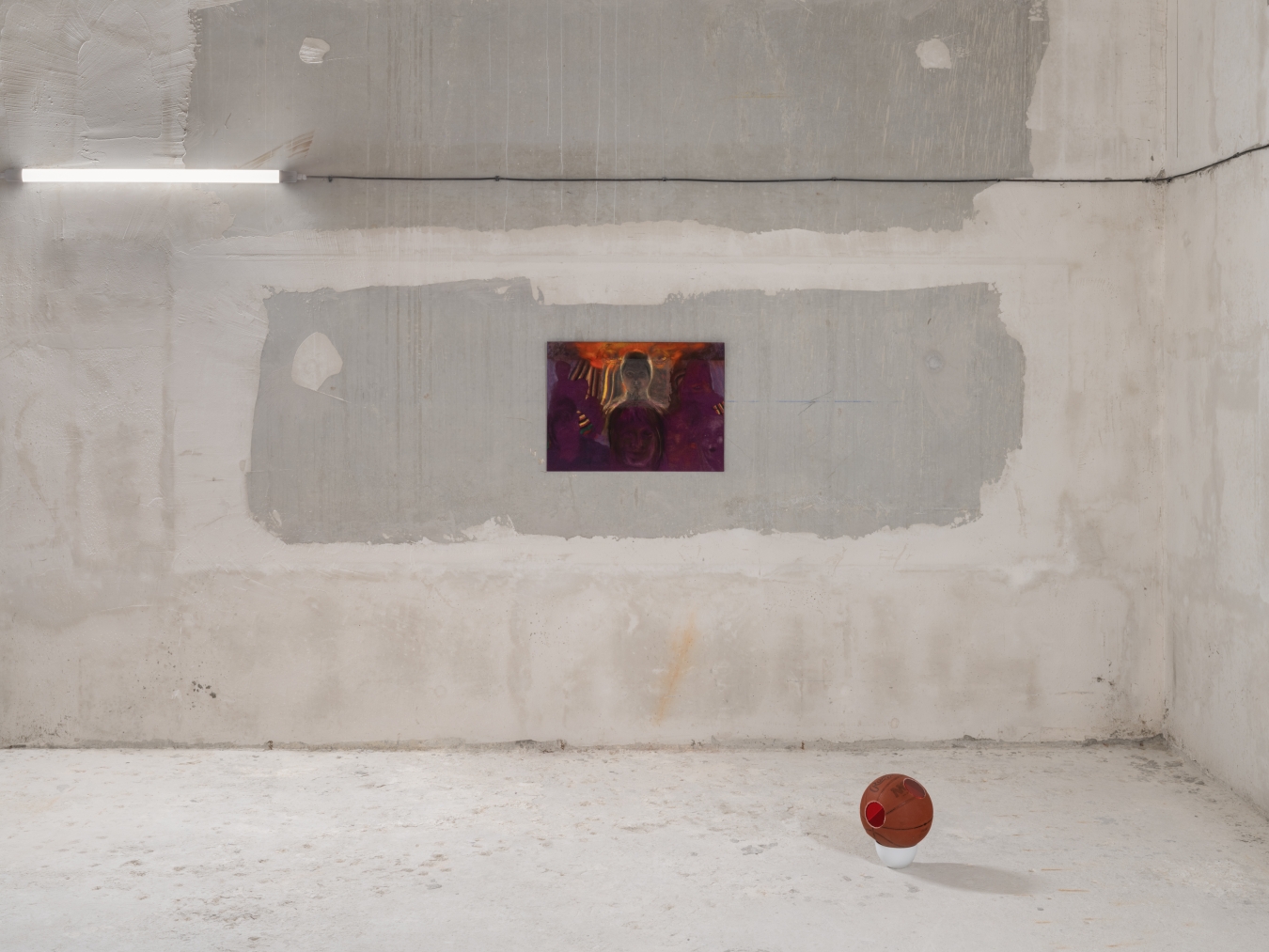 Loading
 Exhibition view, Ultra-Cave, Paris, 2026.
 Loading
 Michael E. Smith, Untitled, 2025, basketball, reflectors, foam, bowl, 34 × 23 × 23 cm.
 Loading
 Stanislava Kovalčíková, Songs from the underground, 2026 (left side), pastel on sanding paper and felt, mounted on MDF in two parts, 74,5 × 54 cm each (diptych).
 Loading
 Stanislava Kovalčíková, Songs from the underground, 2026 (left side), pastel on sanding paper and felt, mounted on MDF in two parts, 74,5 × 54 cm each. (diptych)
 Loading
 Exhibition view, Ultra-Cave, Paris, 2026.
 Loading
 Isabelle Cornaro, Plinths (#2, yellow-green), 2017, acrylic spray paint on plywood, partially sprayed metal, plastic, 70 × 125 × 27,5 cm. (detail)
 Loading
 Exhibition view, Ultra-Cave, Paris, 2026.
 Loading
 Michael E. Smith, Untitled, 2025, basketball, paint, foam, enamel, 23 × 23 cm.
 Loading
 Christian Boltanski, Shadow Cinema, 2011, light box, foam board silhouettes, electric mechanism, 175 × 140 × 20 cm.
 Loading
 Exhibition view, Ultra-Cave, Paris, 2026.
 Loading
 Inès di Folco Jemni, La forgeronne, 2025, oil on canvas, 120 × 120 × 3 cm.
 Loading
 Kyoko Idestu, 話が通じない街/ Where words fail #2, 2024, oil on canvas, 162 × 227,3 cm.
 Loading
 Special thanks to Artistic Palace, Batipart, Emalin, Marian Goodman gallery, Modern Art, Sandra Walter, Sony Music Publishing, Sony Music France, and the artists.
Images: Laurent Edeline & Martin Argyroglo